New Global Watch List Spotlights 25 Critical Sites From Gaza to the Moon

New Threat: The Moon Named on the 2025 World Monuments Watch List
In a startling announcement, the World Monuments Watch has added the Moon to its roster of 25 endangered sites for the year 2025. The celestial body joins a select group of terrestrial and extraterrestrial landmarks that are deemed at risk.
Other Notable Additions
- Gaza’s Cultural Heritage – Historical monuments, archaeological sites, and artistic treasures in the region face looming threats.
- Terracotta Sculptures at a Portuguese Monastery – These ancient clay artifacts, revered for their craftsmanship, require urgent preservation efforts.
Why the Moon is On the List
The designation highlights growing concerns over the Moon’s fragile environment. Factors include increased space debris, potential impacts from future lunar missions, and the broader implications of human activity on extraterrestrial landscapes.
Call to Action
Stakeholders worldwide are urged to collaborate with international agencies, prioritize research, and develop strategies to mitigate risks to these irreplaceable treasures.

World Monuments Watch Unveils 2025 Endangered Sites List, Including the Moon
The World Monuments Watch has released its biennial catalogue of endangered landmarks, marking a historic moment by adding the Moon as the first non‑terrestrial site on the list.
Scope of the Watch Programme
- Since 1996, the non‑profit has highlighted 904 sites across 135 countries plus Antarctica.
- Its mission: to raise awareness and secure resources for protecting cultural and historical treasures at risk.
Why the Moon Matters
The inclusion of the Moon is a reminder that our shared heritage extends beyond Earth. Even though it is isolated from typical threats, the lunar surface now faces growing pressures driven by commercial space initiatives.
“The Moon represents a vital part of the human story, from myth to modern exploration, and it is increasingly vulnerable to private ventures,” said WMF President and CEO Bénédicte de Montlaur in a statement.
Key Takeaways
- First extraterrestrial site on the Watch list.
- Rising risk from future space tourism and cargo missions.
- Call for preservation of lunar heritage alongside terrestrial sites.

Moon Mission Updates and Emerging Space Hazards
Edwin E. Aldrin Jr., the lunar module pilot, marked a historic moment by standing on the Moon’s surface following the Apollo 11 landing on 20 July 1969. The image, credited to AP, captures the first human footprint on another celestial body.
SpaceX’s Dual Lunar Landers
On 15 January—coinciding with the release of the WMWa report—SpaceX launched two autonomous landers to the Moon. These private robotic missions signal growing commercial interest in lunar exploration and raise concerns about the safe navigation of future spacecraft.
NASA’s Artemis Vision
Aligned with the same decade, NASA’s Artemis program seeks to return astronauts to the lunar surface. Its long‑term goal includes establishing a permanent base that will act as a springboard for subsequent missions to Mars. The program’s roadmap underscores the necessity of robust infrastructure and habitat support on the Moon.
Accumulating Orbital Debris
A rising amount of space junk orbiting the Moon introduces additional risks. Satellite fragments, abandoned landers, and propulsion debris clutter the lunar environment, potentially jeopardising spacecraft operations and planetary protection protocols.
Space Tourism on the Horizon
With the advent of commercial space travel, the likelihood of multiple tourist missions to the Moon is increasing. These ventures further compound the challenges of managing orbital debris and ensuring safe interaction with the lunar surface.
What other sites are on the 2025 endangered list?
Global Heritage in the Balance
This year’s list casts a spotlight on a wide array of obstacles that imperil cultural treasures around the world. Among them are the enduring spells of human conflict, the relentless march of climate change, the rapid swelling of cities, and the strain of excessive tourism.
Sites Confronting the Impacts of Climate Change
- Swahili Coast, Africa – Here, escalating sea levels and fierce weather patterns threaten the integrity of age‑old architectural treasures, including historic mosques and burial sites.
- Maine’s 67 Historic Lighthouses – These iconic beacons along the northeastern shoreline face the dual challenge of coastal erosion and ever‑rising storm intensity.
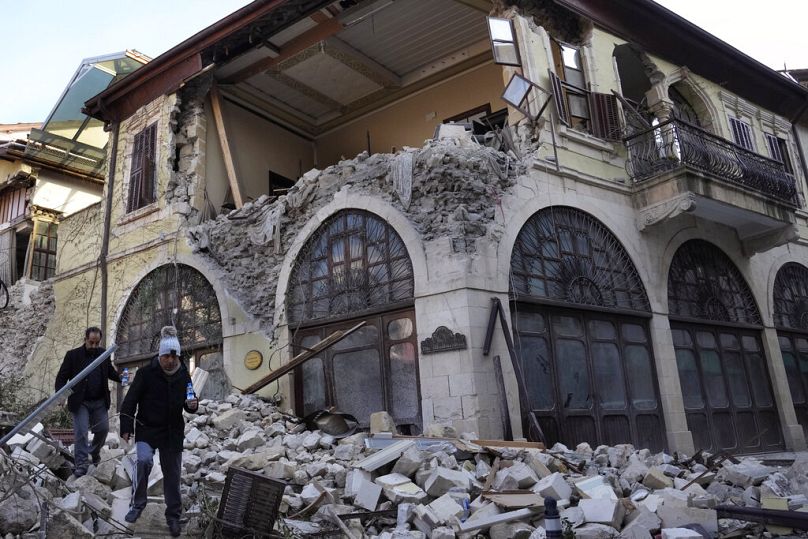
Heritage Sites Beneath the Weight of Natural and Human Turmoil
In the aftermath of the powerful 7.8‑meter earthquake that struck Antakya, southern Turkey, locals passed by a once‑splendid heritage hotel, now reduced to ruins.
Impact of the 2023 Earthquake on Antakya
- Historical character of the city deeply shaken by the seismic event.
- Major infrastructural damage including collapsed buildings and compromised cultural landmarks.
Destruction Driven by Conflict
- Teacher’s House, Kyiv – The prominent dome structure, which hosts the Pedagogical Museum, endured extensive harm when a Russian missile shattered its windows, doors, and the iconic glass roof in 2022.
- According to the World Monuments Fund (WMF), this is among thousands of Ukrainian cultural treasures that have been damaged or destroyed since the war began in 2022.

Gaze on the Ruins of Khan Younis
On January 1, 2025, a group of Palestinian children played near a building that had been shattered by Israeli army strikes in the central Gaza Strip town of Khan Younis.
Historical Context
- In the wake of the Hamas offensive on 7 October 2023 that crossed into southern Israel, Israel unleashed a large‑scale military response.
- These events have placed Gaza’s rich cultural heritage under severe threat.
- On 15 January an agreement between Israel and Hamas was announced, signaling a possible lull in hostilities and the freeing of hostages.
Global Significance of Gaza
“The Middle East is the cradle of civilisation,” the World Monuments Fund (WMF) president and CEO, Bénédicte de Montlaur, noted. “In Gaza, the layers of diverse communities and their heritage are vividly preserved.”
Other Heritage Sites Highlighted
- Terracotta sculptures at Alcobaça Monastery, Portugal
- The historic Chapel of the Sorbonne, France
- Belfast Assembly Rooms, Northern Ireland, UK
Full watch list:
Celebration of Global Heritage
This curated selection of World Heritage sites offers a glimpse into the diverse cultural tapestry that spans continents and centuries. From ancient monasteries to modern urban fabrics, each place tells a unique story of human ingenuity and resilience.
Africa & Middle East
- Swahili Coast Heritage Sites – Comoros, Kenya, Mozambique, Tanzania
- Chapel of the Sorbonne – France
- Jewish Heritage of Debdou – Morocco
- Chief Ogiamien’s House – Nigeria
- Gaza Historic Urban Fabric – Palestine
- Water Reservoirs of the Tunis Medina – Tunisia
- Historic City of Antakya – Türkiye
- Barotse Floodplain Cultural Landscape – Zambia
South and Central America
- Qhapaq Ñan, Andean Road System – Argentina, Bolivia, Chile, Colombia, Ecuador, Peru
- The Great Trading Path – United States
- Historic Lighthouses of Maine – United States
- Waru Waru Agricultural Fields – Peru
Asia & Pacific
- Monasteries of the Drino Valley – Albania
- Buddhist Grottoes of Maijishan and Yungang – China
- Erdene Zuu Buddhist Monastery – Mongolia
- Bhuj Historic Water Systems – India
- Musi River Historic Buildings – India
- Comic Studio Namibe – Angola
- Cinema Studio Namibe – Angola
- Chapel of the Sorbonne – France
- Gaza Historic Urban Fabric – Palestine
- Thousand-year-old Cambodian temples – Cambodia
Europe
- Serifos Historic Mining Landscape – Greece
- Noto Peninsula Heritage Sites – Japan
- Terracotta Sculptures of Alcobaça Monastery – Portugal
- Ruins of Old Belchite – Spain
- Historic City of Antakya – Türkiye
- Belfast Assembly Rooms – Northern Ireland, United Kingdom
- Kyiv Teacher’s House – Ukraine
- Chapel of the Sorbonne – France
Special Mention
- The Moon – celestial wonder beyond terrestrial heritage.