
US Accelerates Lunar Nuclear Reactor Project, Sparking New Space Race
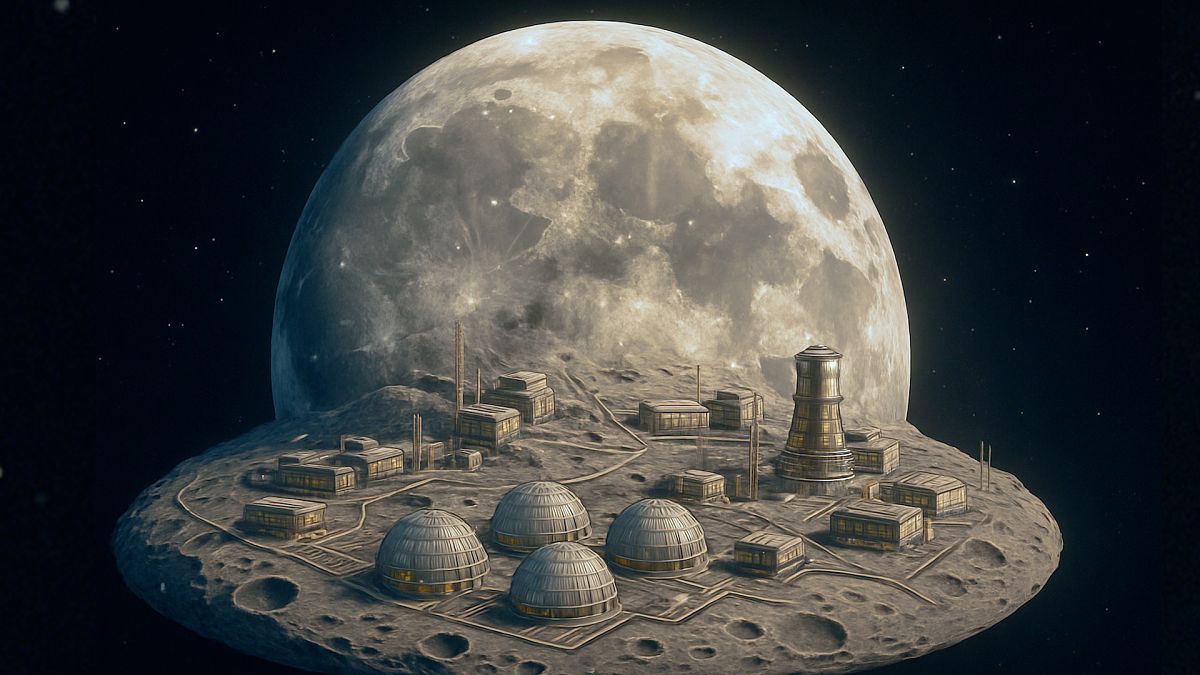
Space Race Takes a New Turn
Energy Independence Beyond Earth Leads the Way
Global powers are stepping into a fresh phase of competition, where autonomous energy sources beyond Earth become critical.
Key Drivers of the Shift
- Reduced reliance on Earth‑bound fuels
- Financial incentives driving orbital power projects
- Strategic advantage gained from establishing space‑based infrastructure
In this renewed era, the ambition to secure self‑sufficient energy supplies in orbit is shaping the strategies of the superpowers—and redefining the future of space exploration.

US Accelerates Lunar Nuclear Reactor Project Amid Space Competition
In response to growing lunar ambitions by China and Russia, the United States is expediting plans to launch a nuclear reactor on the Moon. NASA’s interim administrator, Sean Duffy, announced that the project could be completed as early as 2030, a significant acceleration from prior timelines.
Reactor Power Upgrade
Initially designed for roughly 40 kW of power, the reactor’s output is now projected to reach a substantial 100 kW. This boost is expected to provide a reliable energy supply for forthcoming lunar bases, supporting scientific research and future spacecraft.
Integration with Artemis Initiative
The reactor will be constructed under the umbrella of the international Artemis program, managed by NASA. Artemis’s overarching goal is to return humans to the Moon and lay a foundation for Martian exploration.
Essential Supporting Infrastructure
- High‑capacity transmission networks to deliver power across lunar landscapes
- Long‑duration energy storage systems to maintain continuous operation
- Robust monitoring and safety protocols to ensure structural integrity
- Logistical platforms for component assembly and maintenance
Implications for Global Space Economics
The rapid progression of this project signals a new phase in international space competition, extending beyond Earth’s borders and redefining how nations approach extraterrestrial development.
Is the 2030 deadline possible?
NASA’s Mission to Deliver 40 kW of Space‑Based Fission Power by 2030
Experts agree that the 2030 deadline is ambitious, yet technically feasible. NASA, in partnership with the U.S. Department of Energy, is developing a surface‑mounted fission power system capable of producing at least 40 kW.
Projected Household Impact
According to NASA, the system’s output of 40 kW would support the electric needs of roughly thirty households for a decade.
Operational Challenges
- Temperature swings from daytime heat to nighttime frosts of –200 °C
- No atmospheric pressure and limited cooling options
- Reduced gravity relative to Earth
Design Requirements
- Sealed, highly reliable construction
- Advanced heat management for low‑pressure, low‑gravity environments
- Robust safety features to prevent contamination and structural failure
Launch Considerations
To reduce the risk of contamination in case of launch failure, the reactor will be shipped in an unactivated state.
Competition to establish on the Moon
Moon Strategy: How a Lunar Reactor Could Restrict Global Access
International Space Law versus Practical Realities
According to the 1967 Outer Space Treaty, no nation is permitted to stake territorial claims on the Moon. However, technical constraints can make it difficult for other countries to approach key sites once a nuclear reactor is in operation.
Potential Strategic Impact of the First Lunar Reactor
As Dr. Duffy notes, “The first country to place a reactor on the Moon could declare a keep‑out zone, blocking the United States from building its Artemis base unless it takes precedence.”
China’s Lunar Ambitions
- Testing the Lanyue lunar lander, China aims to launch astronauts to the Moon by 2030.
- Collaborating with Russia, the country plans an International Lunar Research Station by 2035, which may host its own nuclear power plant.
These developments highlight how nations are weighing the benefits of lunar energy resources against the potential for creating geopolitically exclusive zones, all while navigating the constraints of outer space law.
Technological partnership with Europe
European Lunar Initiative Beyond Artemis
While the Artemis programme gains worldwide attention, European nations are forging their own ambitious projects that not only inspire U.S. missions but often feed directly into them.
Italy’s SELENE – A Nuclear “Moon Energy Hub”
- The SELENE (Lunar Energy Systems with Nuclear Energy) project focuses on building a Moon Energy Hub, a reliable power source for lunar operations.
- It uses compact surface nuclear reactors, creating a stable energy supply on the Moon.
ASI & NASA Collaboration
- Italy’s ASI partners with NASA to design a dedicated refuge module for astronauts, ensuring safer stays on the lunar surface.
ESA’s Moonlight Satellite Constellation
- Exported by ESA, the Moonlight programme deploys five satellites orbiting the Moon.
- Four provide navigation data, while one focuses on communication.
- Supported by Italy and the United Kingdom, this network aims to support more than 400 missions in the next 20 years.
The LUPIN Navigation System
- Spanish company GMV has developed LUPIN, a GPS‑like system tailored for lunar conditions.
- Testing took place on Fuerteventura, an island with terrain that simulates the Moon’s surface.
Airbus & ESA – Transport to the ISS
- Airbus collaborates with ESA to build a cargo transport vehicle capable of delivering supplies to the International Space Station.
European Large Logistic Lander (EL3)
- The EL3 is a modular lander designed to carry payloads and samples to the lunar surface, enhancing European autonomy in exploration.
The LUNA Centre in Cologne
- Joint effort by ESA and Germany’s aerospace centre.
- It is a 700‑metre hall that replicates the Moon’s surface, complete with a rock layer and lighting mimicking day/night cycles.
- Its purpose: to train astronauts, test robots, study human‑machine interactions, and experiment with energy systems under lunar‑like conditions.
Return to the Moon
Reaching for the Moon: A New Era of Energy Autonomy
The grand competition in outer space is shifting toward an era where energy independence on celestial bodies becomes a linchpin of global power dynamics. A lunar-based reactor is emerging as more than an engineering marvel—it is poised to become a pivotal arena in the struggle for technological and geopolitical dominance.
2030: Human Return and Sustainable Power
By the close of this decade, we anticipate not only a renewed crewed presence on the Moon but also the installation of the first permanent energy facilities. These power plants will serve as the cornerstone for a lasting human footprint beyond Earth.
Key Questions on Law, Security, & International Collaboration
- The Outer Space Treaty forbids the ownership of the Moon, yet the concept of security zones could herald new geopolitical realities.
- Europe’s diverse portfolio of projects positions it as both a strategic partner and an independent actor, melding cutting‑edge technology with leadership in shaping lunar exploration standards.
- Should these ambitions materialize, the Moon’s future might resemble an industrial technology hub rather than a pristine desert.
The New Imperative
We are entering a time where the decisive question moves from “Will we establish bases on the Moon?” to “Under which regulations, and who controls them?”
Author & Production
Journalists • Pawel Glogowski
Video editor • Pawel Glogowski