
UK Court Rejects Legal Battle Over Export of Military Parts to Israel
High Court Declares National Security Imperative
In a detailed 72‑page opinion, two High Court judges ruled that the subject matter at hand constitutes a national security issue. Their decision highlighted that the disputed elements are critical for the UK’s defence partnerships and play a pivotal role in maintaining both national safety and global stability.
- Essential for defence collaboration
- Key to safeguarding UK security interests
- Integral to sustaining international peace

High Court Dismisses Human Rights Challenge to UK Arms Supplies
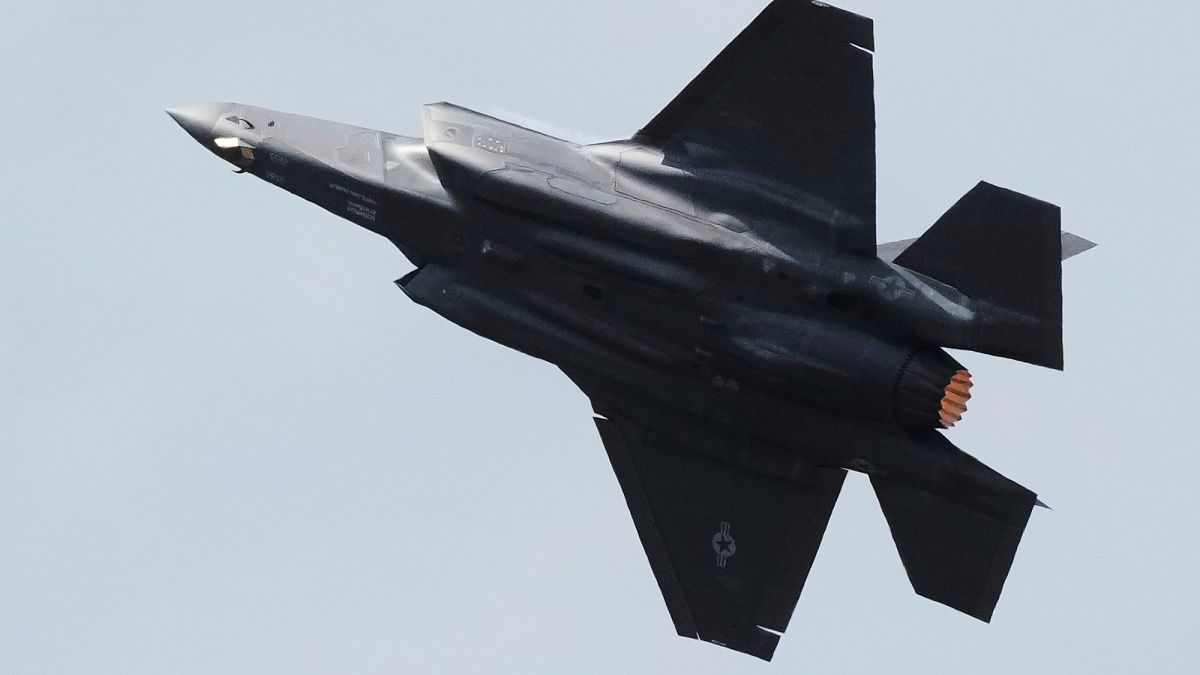
London’s High Court denied a legal claim by a coalition of human‑rights organisations, ruling that the British government may continue to provide Israeli defense forces with parts for the F‑35 fighter jets and other military hardware. The decision comes after a scrutiny of the UK’s participation in a global arms‑pool arrangement, which the plaintiffs claimed violated both domestic and international legislation.
Parties Involved in the Litigation
- Global Legal Action Network – a UK‑based rights advocacy group
- Al‑Haq – a human‑rights organization based in Ramallah
- Human Rights Watch, Amnesty International and Oxfam – international NGOs assisting the case
Key Allegations Against the UK
The plaintiffs alleged that the UK’s indirect supply of critical F‑35 components to Israel posed a “clear risk” of breaching both national and international law. They argued that the UK was exploiting a “deliberate loophole” within the arms‑pool mechanism, enabling Israel to acquire parts linked to recent military actions, notably in Gaza.
High Court’s 72‑Page Verdict
Justices Stephen Males and Karen Steyn delivered a verdict stating that the matter falls under national security, and therefore “descend[s] to the executive.” The court emphasized that such politically charged decisions are the remit of the elected government, which is accountable to Parliament and ultimately to the electorate, not to the judiciary.
The ruling explained that the components in question are produced in the UK and subsequently sent to assembly lines in the United States, Italy and Japan – all partner nations that supply Israel with aircraft and spare parts. The court noted that these supplies are integral to the defence collaboration, “pertaining to the UK’s security and international peace.”
Government Response and Licensing Overview
In September 2024, the UK government halted 30 of its 350 export licences directed at Israeli military equipment, including certain helicopter and drone components. However, licences covering F‑35 parts were exempted from this suspension. While the UK remains a relatively minor arms supplier compared to the United States and Germany, the Campaign Against Arms Trade estimates that British firms supply roughly 15% of the F‑35 stealth aircraft’s components, notably its laser‑targeting system.
Implications for Future Arms Transactions
The court’s decision reinforces the UK’s ability to engage in the global arms‑pool framework without undue judicial interference, provided national security interests are considered. Nonetheless, the ruling may prompt increased scrutiny from rights organisations and international observers regarding the ethical dimensions of arms trade involving civilian conflicts.