Spanish doctors build artificial womb to stop miscarriages
Artificial Womb Offers New Insight Into Early Embryonic Development
Researchers have engineered a state‑of‑the‑art artificial womb that replicates the natural uterine environment. This breakthrough enables scientists to probe the reasons behind the high failure rate of embryonic implantation.
Key Findings
- Implantation Failure Rates: About 60% of embryos do not successfully implant or die shortly after conception, contributing significantly to miscarriage statistics.
- Controlled Environment: The artificial womb allows precise manipulation of hormonal and mechanical cues that influence implantation.
- Early Development Monitoring: Continuous imaging and molecular profiling provide real‑time data on embryonic growth and viability.
Implications for Maternal Health
These insights open avenues for developing preventive strategies tailored to the individual hormonal and cellular milieu of each embryo. Enhanced understanding of the implantation process could reduce miscarriage rates and improve reproductive outcomes.
Future Directions
- Integrating personalized medicine to adjust uterine conditions for each patient.
- Exploring therapeutic interventions that enhance embryo resilience during the critical implantation window.
- Assessing long‑term developmental outcomes in embryos supported by artificial womb technologies.

First Live Visualisation of Human Embryo Implantation
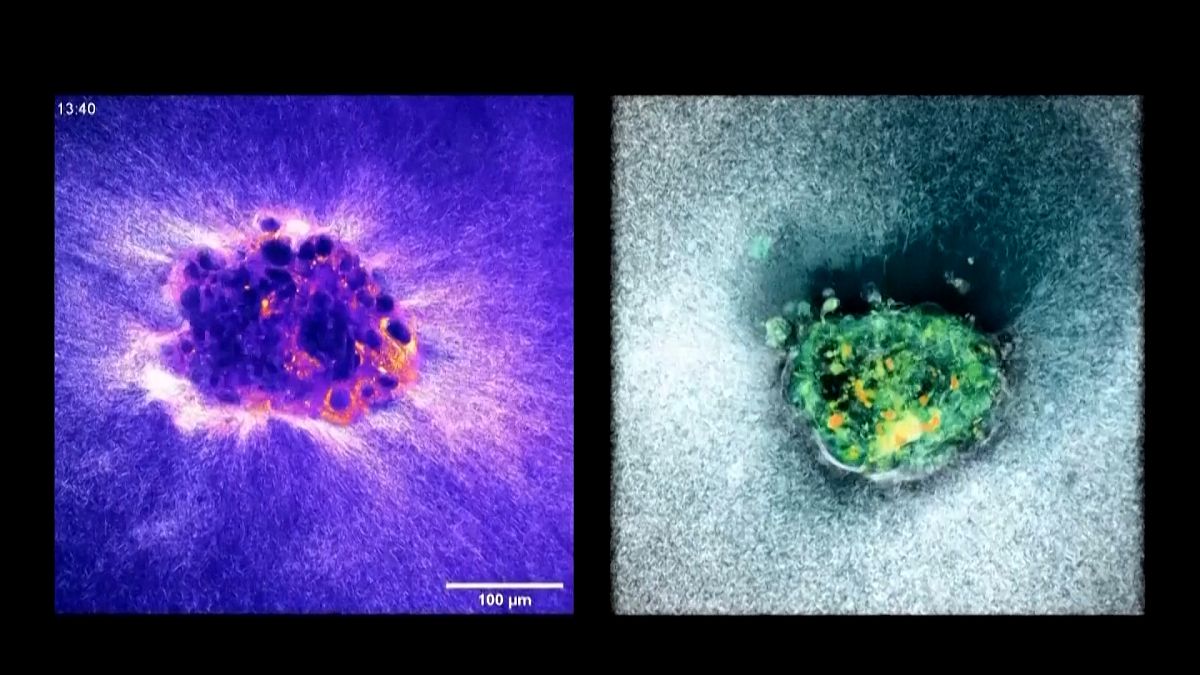
A groundbreaking study from the Institute for Bioengineering of Catalonia (IBEC) in Barcelona has captured the moment a human embryo attaches to uterine-like tissue in real time—a milestone claim for the field of reproductive biology.
Why the Process Has Been Elusive
During the early stages of pregnancy, known as implantation, scientists struggled to witness the exact sequence of events. Traditional methods relied heavily on a handful of static photographs because no continuous recording was possible.
The Experimental Setup
- Artificial Uterus Construction: The research team crafted a synthetic lining of collagen and natural proteins to mimic the real uterine wall.
- Embryo Placement: Human embryos donated for research were carefully placed onto this engineered surface.
- Observation: High‑resolution cameras recorded the embryos’ movements as they engaged with the tissue.
Key Findings
Video footage revealed embryos actively digging and pulling themselves into the tissue. The data indicated that healthier embryos exhibited stronger pulling forces, suggesting that the embryo’s invasive capacity is a critical determinant of successful implantation.
“The emerging embryos are intensely invasive, producing a hole in the matrix and applying substantial force to secure themselves,” explained Samuel Ojosnegros Martos, head of bioengineering in reproductive health at IBEC.
Comparative Mouse Study
To explore species differences, the same procedure was applied to mouse embryos. Contrary to human embryos, the mouse models remained on the surface of the artificial uterus, refraining from penetrating the tissue.
These insights into the unseen mechanics of implantation offer a promising avenue for diagnosing early pregnancy challenges and improving assisted reproductive technologies.
Why it matters
Unlocking Implantation: New Insights into Embryo Success
Why Implantation Matters
Successful implantation is crucial for a healthy pregnancy, yet about 60 % of embryos fail to embed in the uterus or are lost shortly thereafter. This high failure rate is a leading cause of early miscarriage.
What the Recent Research Reveals
Scientists are now beginning to untangle the mystery behind why some embryos take hold while others do not. According to Dr. Tim Child, a reproductive medicine professor at Oxford, this work offers a “fascinating look into the underlying reasons for differential implantation.”
Implications for In‑Vitro Fertilisation (IVF)
- IVF embryos that possess the correct chromosomal makeup can achieve implantation rates up to 80 %.
- Despite chromosomal normality, implantation is not guaranteed—raising the question:
Why do some normally‑sized embryos still fail?
- The transfer stage, when lab‑grown embryos enter the uterus, is identified as the most common point of failure.
Future Directions
With the new findings, researchers anticipate that pharmaceutical solutions might be developed to enhance implantation probabilities in humans.
What This Means for Patients
Understanding the science behind implantation could significantly boost the success rates of IVF treatments, offering greater hope for those struggling with infertility.