Spain’s Octopus Industry on the Brink of Collapse: Overfishing, Climate Change, and Global Demand Collide
Conflict Over the Ethical Future of a Historic Fishing Industry
Stakeholders and Their Perspectives
- Animal Advocacy Groups: Demand stricter regulations to protect marine life and end destructive fishing practices.
- Scientific Community: Calls for evidence‑based policies and emphasizes the need for comprehensive environmental impact studies.
- Commercial Fishermen: Argue for sustaining livelihoods, balancing economic needs with sustainable methods.
Central Issues at Play
- Environmental Sustainability: Debates over whether current harvest levels are tenable for future marine ecosystems.
- Economic Viability: Concerns about how stricter standards will affect market stability and fishers’ income.
- Ethical Responsibility: The moral obligation to ensure humane treatment of marine species and preserve oceanic health.
Potential Pathways Forward
- Developing collaborative frameworks that integrate ecological science with on‑the‑ground fishing operations.
- Implementing phased policy shifts to allow gradual adaptation while monitoring ecological outcomes.
- Encouraging transparent dialogue among all parties to foster mutual understanding and shared goals.

Octopus Industry Faces Challenges Amid Rising Global Demand
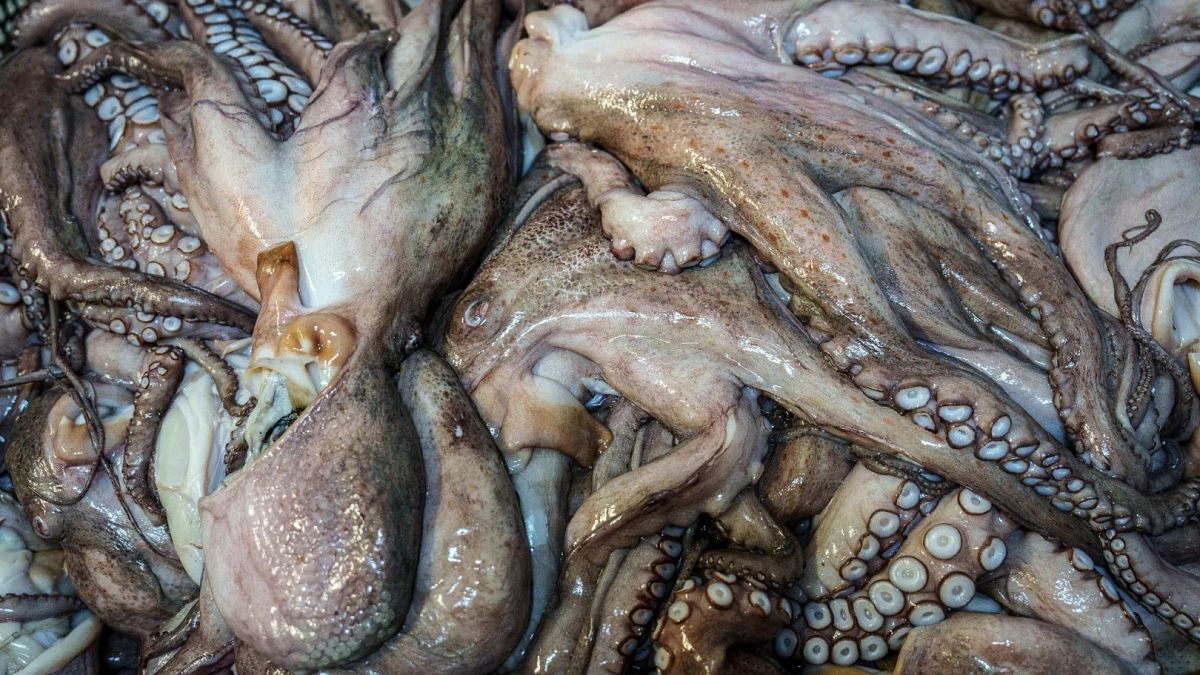
In the bustling eponymous town of O Carballino, a factory hums as workers haul dozens of limp octopuses into a stainless‑steel cauldron, their aprons smeared with slick strands of mucus. Simultaneously, other teams slice away at tentacles and seal the portions in vacuum bags destined for culinary outlets worldwide.
Spain’s Self‑Proclaimed Octopus Capital
- Worldwide recognition as “Spain’s octopus capital,” symbolized by a towering bronze statue.
- Streets lined with pulperías offering fresh servings to locals and tourists.
- Annual festival drawing tens of thousands of visitors each year.
Supply Shortage in Local Waters
Despite the town’s fame, the century‑old establishment has not harvested a single octopus from local seas for the past decade. “In Galicia, octopus has become highly variable and scarce,” explains Carlos Arcos, export manager of Frigorificos Arcos SL. “For an industrial operation like ours, a reliable feedstock is essential for maintaining customer continuity.”
Implications for the Global Market
- Growing worldwide appetite for octopus.
- Increasing scarcity affecting supply chains across Europe, Asia, and North America.
- Need for sustainable sourcing to meet demand without depleting native populations.

Octopus Statue Captures Spain’s Marine Story
In the quiet town of O Carballino, a striking octopus sculpture stands as a tribute to the region’s vibrant marine life and the growing global fascination with the cephalopod.
Global Supply Sources
- All octopus fishery operations in the area currently source 100 % of their catch from Mauritania and Morocco.
- These distant waters provide the primary supply chain for local seafood companies.
Rising Pressure on Wild Populations
- Year‑to‑year variations are natural, but experts observe a long‑term decline in Spain’s octopus stocks.
- Increasing worldwide demand has amplified the pressure, creating a tighter catch quota.
Turning to Aquaculture
- In response, several firms are exploring tank‑based cultivation to safeguard future supplies.
- Proponents argue that controlled rearing could stabilize the market and relieve wild fishery pressure.
- However, animal welfare organizations have voiced concerns about the ethics of breeding octopuses indoors.
Balancing Sustainability and Ethics
The debate highlights a critical intersection of ecological sustainability and humane farming practices. Stakeholders in Spain and beyond must navigate these challenges to ensure a responsible, long‑term relationship with an iconic sea creature.
Pressure forces closure of Spain’s octopus fishery
Spain’s Octopus Industry Stumbles After Three-Month Closure
For the first time in recent history, the pressure on Spain’s octopus fishery reached a critical point this summer.
After a surprise shutdown that lasted three months—long enough for managers to hope the population would rejuvenate—a warning sounded from the coast of Cangas, where hundreds of empty traps await the next season.
“We’re at a tipping point”
Juan Martínez, a veteran fisherman with more than forty years of experience, warned that the gradual recovery can still lead to a rapid collapse. “The octopus numbers have just started to climb, but once the season opens, we’ll wipe out everything in two weeks,” he said.
Along with Martínez, many other fishermen purchased by the early shutdown are eyeing the dock lines where old traps lie dormant.
Implications for the Ecosystem
- Overexploitation risk: Even a brief burst of fishing can decimate populations that have barely rebounded.
- Habitat damage: The sudden increase in gear deployment exerts pressure on the surrounding sea floor.
- Long-term viability: The industry may need to adopt stricter quotas or rest periods to sustain its future.
Key Takeaways
• A three-month halt is an unusually long pause for octopus fishing, highlighting the severity of the issue.
• Solidarity among fishermen suggests immediate concern for future sustainability.
• Experts emphasize that while short-term closures may aid recovery, careful management during the open season is essential to avoid repeated damage.
“This used to be a sustainable industry, but now we’ve broken an entire ecosystem,” Martínez repeated, underscoring the urgent need for change.
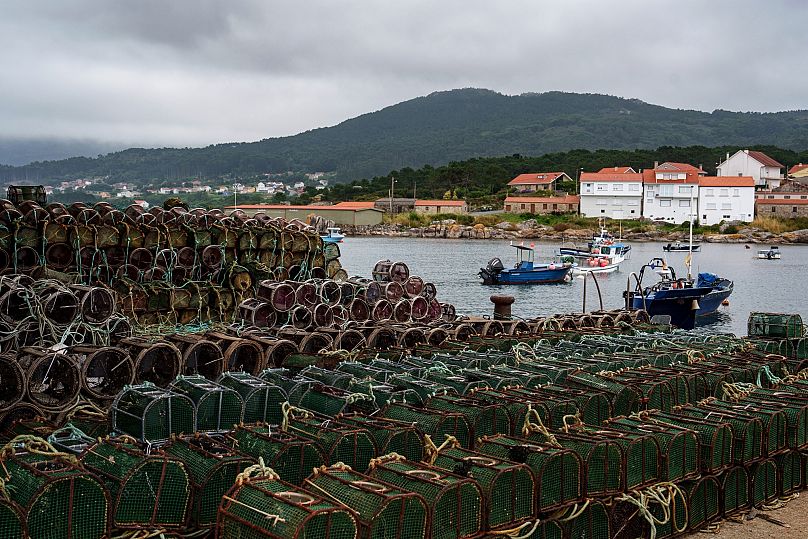
Octopus Catchers Pause at Sea in Lira
Photo credit: AP Photo/Annika Hammerschlag
Extended Halt of Octopus Fishing
At the Port of Lira, fishermen have erected a series of octopus traps, but the activity has been suspended for an unusually prolonged period.
Ocean Dynamics Supporting Octopus Life
- In Galicia, the health of octopus populations is tied to the phenomenon of nutrient‑rich upwelling, where deep, cold waters rise to the surface, supplying essential food sources.
- Professor Ángel González, a researcher at the Spanish National Research Council, explains that while this natural cycle usually varies over time, climate change is reshaping wind forces, water layering, and the supply of nutrients.
- These alterations are making the upwelling less predictable and, in some years, significantly less productive.
Impact on Octopus Numbers
Professor González notes that when the upwelling weakens due to these shifting oceanographic and atmospheric conditions, the octopus population declines regardless of fishing activity.
Octopus Farming Efforts in Spain
Traditional Capturing Techniques
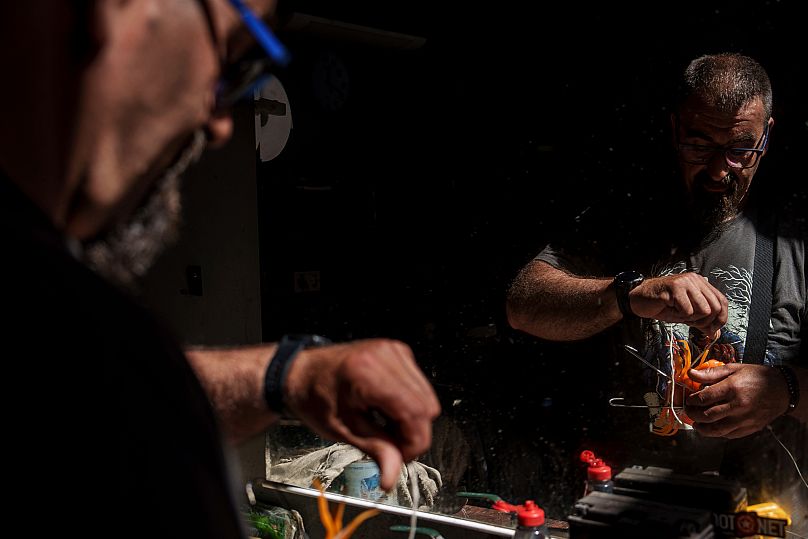
In an engaging showcase, octopus fisher Juan Martínez demonstrated the family‑heritage capture device that has been employed for generations in the region.
Shift Towards Farmed Octopus
- Rising Demand & Declining Wild Stocks — Over the past decade, commercial exploitation of wild octopus has surged, leading to significant depletion of natural populations.
- Spain’s Response — Certain companies are now exploring captive breeding as a strategy to reduce fishing pressure and meet market needs.
Grupo Profand
Based in Galicia, Grupo Profand is establishing a research hatchery specifically designed to tackle the biological hurdles associated with breeding octopus in captivity. The facility aims to refine techniques that could spur broader adoption of octopus aquaculture.
Nueva Pescanova
<Able to provide a well‑known seafood giant it is pursuing a different path: a large‑scale industrial farm that could cultivate up to one million octopuses annually for processing and sale.
Company Responses
- Grupo Profand declined to comment during an interview request.
- Nueva Pescanova officials also refrained from providing further statements.
Animal welfare groups say octopus farming is ‘torture’
Wild Octopus Farming Sparks Animal Welfare Outrage
Animal protection organizations have voiced strong opposition to a newly proposed aquaculture project. They argue the plan would involve the methane‑free freezing of octopuses and the enclosure of these highly intelligent but solitary creatures at unsustainable population densities, potentially leading to self‑harm and widespread distress.
Environmental Concerns
- The operation could release untreated wastewater into nearby marine ecosystems, threatening water quality.
- It would intensify excessive harvesting of wild fish used as feed, thereby exacerbating over‑fishing crises.
- Overall, the scheme poses a serious risk to the health of the surrounding oceanic communities.
Expert Voices
Helena Constela, communications lead at Seaspiracy, underscored the cruelty of farming free‑living species, especially octopuses, noting: “Squeezing them into confined tanks is tantamount to a slow‑motion torment for a creature that thrives on individuality and keen intellect.”
Michael Sealey, senior policy advisor for Oceana Europe, counseled that aquaculture ventures should pivot toward organisms with a smaller footprint—such as oysters and mussels—which do not depend on fish feed and thus mitigate ecological strain.

Octopus Bite Turns Into Dining Trend in Spain’s Casa Gazpara
In the small town of O Carballino, Spanish diners savor a scrappy octopus dish at the popular local restaurant Casa Gazpara, a rarity that has drawn the attention of culinary enthusiasts and marine conservationists alike.
Experts Warn About the Impact of Octopus Cultivation
“We recognize the role aquaculture can play in feeds the global population,” observed Michael Sealey, senior policy advisor at Oceana Europe. “But we must prioritize low‑impact farms instead of systems that rely on feeding wild fish to carnivorous species.”
Nationwide Shift in Policy Against Octopus Farming
- Washington (2024) and California became the first U.S. states to ban both octopus farming and the sale of farmed octopus.
- Over half a dozen other states have introduced similar ban proposals.
- A bipartisan federal draft bill now seeks to prohibit the farming and importation of farmed octopus across the country.
No Existing U.S. Commercial Farms, But Growing Concerns
Despite the absence of operational farms in the United States, lawmakers are acting preemptively to curb projects that may begin in Europe, Asia, and Central & South America, reflecting heightened unease over potential ecological consequences.
Documentary Raises Public Consciousness
The 2020 Oscar‑winning film “My Octopus Teacher” showcased the intelligence and emotional depth of these cephalopods to millions via Netflix, further fueling debate over the morality of octopus aquaculture.
What are the arguments in favour of farming?
Octopus Intelligence Sparks Debate on Animal Welfare and Conservation
Researcher Alejandro González of Spain’s National Research Council urges caution in attributing human-like traits to octopi, while advocating for farming as a means to bolster dwindling wild populations.
Key Findings
- Octopi demonstrate complex problem‑solving and learning abilities that most other marine creatures lack.
- González emphasizes that while their brains are sophisticated, they remain invertebrates and should not be anthropomorphized.
- He warns that attributing “personality” to non‑human animals could lead to misguided policy decisions.
Farming Strategy
González, collaborating with Grupo Profand, has begun raising juvenile octopi in a controlled hatchery environment. The plan is to release these individuals back into the ocean to support natural populations.
Animal welfare advocates suggest that this approach might pave the way for industrial‑scale aquaculture, reducing pressure on wild colonies while ensuring ethical treatment.
Related Topics
- Record coral losses in the Great Barrier Reef raise concerns about escalating climate stress.
- Global black rhino numbers are increasing, yet other species face significant threats.
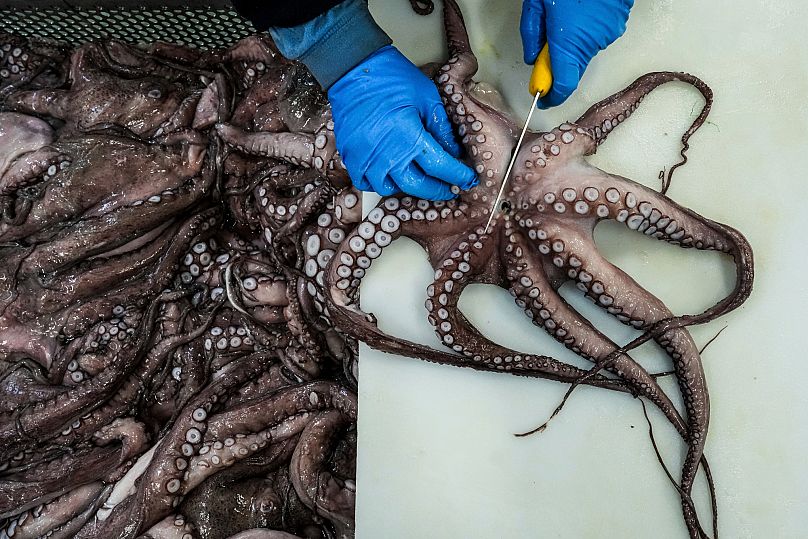
Octopus Farming: A New Frontier in Food Security
In the coastal town of O Carballino, Spain, a crew at Frigorificos Arcos SL is charting a new course in aquaculture by delicately removing the beak of an octopus during processing. This meticulous technique is part of a broader shift toward efficient and sustainable seafood production.
Why Octopuses Matter
The aquaculture sector is gaining momentum as a pivotal contributor to global food security. According to Javier Ojeda, the national aquaculture representative at APROMAR, octopuses offer several advantages over traditional livestock:
- Rapid growth rates and high yield.
- Minimal energy consumption—no need for heating.
- Low environmental impact compared to land-based farming.
Addressing Welfare Concerns
While the benefits are clear, Ojeda acknowledges that raising such intelligent creatures raises valid welfare considerations:
“We must ensure that practices evolve with scientific knowledge,” Ojeda says. “Our goal is to balance productivity with humane treatment.”
He emphasizes that the scientific pursuit of an optimal farming protocol should not be hindered by ethical debates.
Future Directions
Ojeda underlines the inevitability of aquaculture expansion:
“Farming octopus is something that cannot be stopped,” he asserts. “With a long tradition of consumption, it’s time to refine techniques and safeguard the welfare of these remarkable species.”
As Spain’s aquaculture industry continues to innovate, the humble octopus may soon become a staple in the world’s sustainable diet.