
Space Data Centers—Myth or Europe’s New Space Edge

European Vision for Space‑Based Data Centers
While the first of these orbital hubs may not launch before 2036, European partners are proactively exploring the practicalities of relocating data‑processing facilities beyond Earth’s atmosphere.
Why Off‑Earth Computing?
- Reduced latency for global networks
- Enhanced resilience against terrestrial disruptions
- Potential for lower energy consumption by leveraging space‑based cooling
Key Sustainable Strategies
- Use of renewable energy sources such as solar arrays on orbital platforms
- Designing modular, recyclable components that can be serviced or upgraded remotely
- Implementation of closed‑loop thermal management to minimize heat loss
Projected Milestones
The anticipated timeline involves:
- 2028–2029 – Detailed feasibility studies and prototype testing
- 2031–2033 – Development of complementary ground infrastructure
- 2036 – First operational launch of a space‑borne data center
By methodically addressing both design and environmental impact, Europe aims to set a benchmark for green data‑center technology beyond Earth’s limits.

Space‑Based Data Centres: A New Frontier for the Digital Age
Generative artificial intelligence has spurred an unprecedented surge in the need for data‑processing infrastructure. Yet, the finite supply of land and the escalating power demands on Earth have led European policymakers to explore an unconventional solution: establishing data centres orbiting the planet.
Technical, Environmental, and Economic Feasibility
A recently published study—financed with €2 million and conducted over 16 months—demonstrated that launching data centres into orbit is not only possible but also benefits from reduced energy consumption compared with terrestrial facilities.
Key Findings
- Technical Viability – The systems can operate reliably in the space environment.
- Economic Advantage – The projected cost structure aligns with existing budgets for large‑scale digital projects.
- Lower Carbon Footprint – The absence of ground‑based power consumption translates into a significantly smaller environmental impact.
Expert Commentary
Damien Dumestier, who led the research on behalf of Thales Alenia Space, expressed optimism: “The results are very encouraging. We have identified a solution that is technically sound, financially sensible and environmentally favorable.” He shared these insights during a recent interview with Euronews Next.
Broader Context
- Concerns about the scarcity of data centre capacity in Europe have been highlighted by the emerging Mistral AI initiative.
- Microsoft’s recent expansion into new data centre deployments has led to a reported 30% rise in corporate emissions, prompting discussions about sustainability.
Land grab
Data Centers: Power Demands and Emerging Solar Solutions
Data centers are specialized facilities that store an organization’s computer systems and massive amounts of data, enabling worldwide access. Their operation requires significant electricity to power equipment and maintain cooling systems.
Energy Consumption Highlights
- By 2026, total annual usage could reach 1,000 terawatt-hours,
- Comparable to the electricity consumption of Japan,
- These figures underscore the growing demand for sustainable power sources.
Future Outlook for Space-Based Data Centers
The concept of a space data center envisions a facility that operates primarily on solar power, significantly reducing its energy footprint. Such a system could harness the sun’s continuous irradiation, providing an almost zero-energy-intensive solution for data storage and processing.
Key Advantages
- Minimal reliance on terrestrial grid infrastructure,
- Continuous power supply thanks to solar energy,
- Potential for reduced operational costs over long-term horizons.
These innovations represent a promising step toward a more efficient and environmentally friendly approach to global data management.
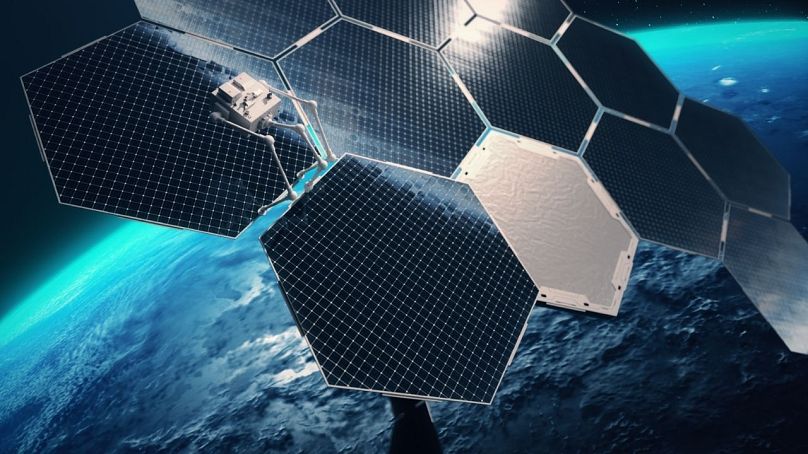
A New Frontier for Data Centers: Space-Based Solutions
Thales Alenia Space has recently released findings that propose launching data centers into orbit as a viable, less energy‑intensive option for the future. The research indicates that such projects are not only technically feasible but also environmentally and economically sound. Despite this progress, experts predict that the first operational satellite data center might still be a decade away.
2036: The Target Year
According to industry specialist Dumestier, the launch of orbital data centers will likely reach commercial readiness around 2036. This timeline places the initiative firmly within the near‑future, requiring robust development and regulatory support.
Demand from Big Tech
- Hyperscalers – large giants such as Microsoft, Amazon Web Services (AWS), and Google are actively seeking high‑capacity, secure data storage.
- Power Constraints – European markets face shortages of available and reliable power, limiting the expansion of terrestrial data centers.
- Land Availability – Identifying and securing locations with adequate infrastructure and power sources remains a growing challenge.
Impact on European Land Use
As a consequence, data center development is expected to spread into regions of Europe previously untouched by such facilities. This shift is exemplified by Microsoft’s recent acquisition of land in Yorkshire, northern England, where power infrastructure has already been secured. Such moves illustrate the broader trend toward utilizing land with established, high‑capacity energy supplies.
Future Outlook
While the promise of orbital data centers offers an exciting new direction, the path to reality involves intricate technical, environmental, and economic considerations. Stakeholders across the industry must collaborate to navigate these challenges and realize the vision of more efficient, space‑based data storage solutions.
‘A figment of the imagination’
Space‑Based Data Centers: A Dream or a Future Venture?
Kevin Restivo remarks that the notion of building data centers in orbit is more
fantasy than fact at present, yet he still sees value in exploring both space and
underwater facilities.
Why Look Beyond Earth?
Testing the parameters of data center development is essential
for industry growth. By experimenting with unconventional environments,
companies can uncover new power sources and fine‑tune autonomous
operations, reducing the need for constant human oversight.
- Alternative energy: Decoupling from the power grid.
- Self‑management: Minimizing ground intervention.
Implications for Space Technology
Venturing into space could spur advances in robotics, launch systems, and other
space‑related sectors. Efficient space data centers would demand launchers
that emit significantly less pollution—down by a factor of ten, according
to recent studies. Additionally, the platforms must rely on sustainable
propulsion, possibly requiring novel fuel solutions.
Strategic Partnerships and Sustainability
Collaborations with France’s Ariane Group and German space firms suggest
that eco‑friendly launchers may become viable within the next few years.
A critical concern is avoiding contributions to the growing population
of decommissioned satellites. The proposed orbit, around 1,400 km,
offers a higher, less congested altitude.
Ensuring long operational lifespans and reusable materials
remains a top priority for meeting environmental targets.
Benefits for Europe
Scientists claim that space data centers could restore data sovereignty for
European nations, providing a flagship opportunity for deployment and
establishing a leadership role in the space sector.
“The market is ripe and opens doors to numerous applications,”
claims a leading expert, underscoring the broad potential of this venture.