Chat with Ai‑Da: The Trailblazing Lifelike Robot Artist Shaping a Global AI Identity
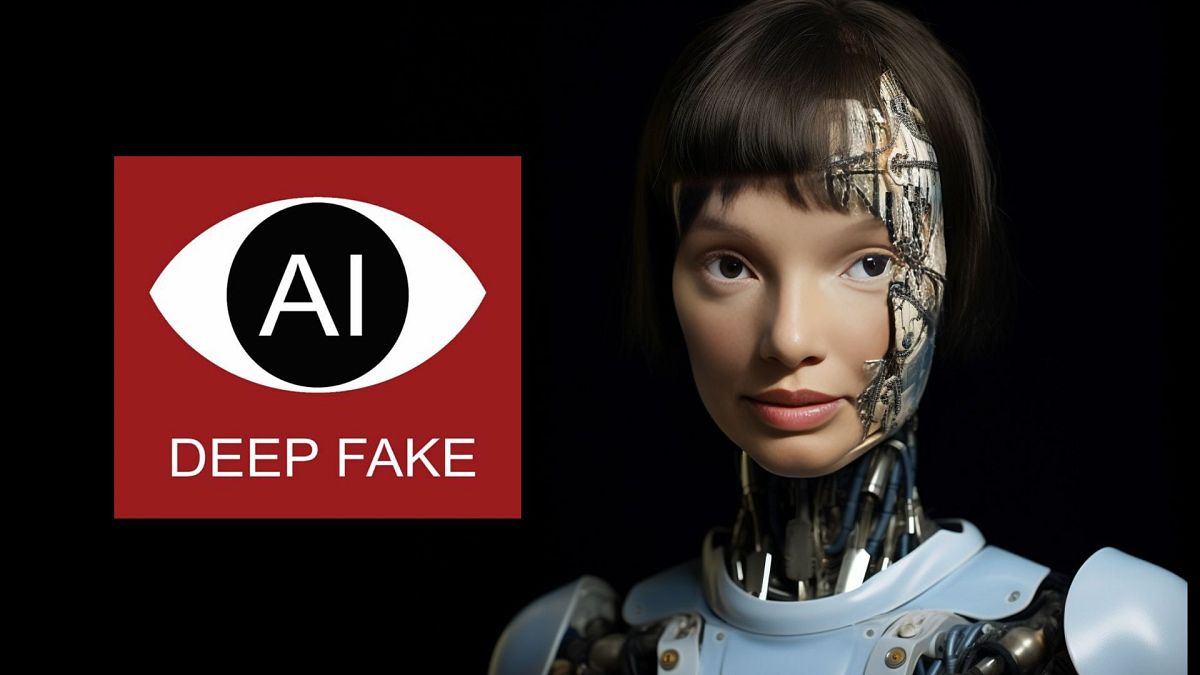
Ai‑Da Calls for a Global Standard to Tackle the Deep‑Fake Menace
Why the Issue Matters Now
As deep‑fake images and videos become increasingly sophisticated, they threaten the integrity of public discourse by targeting politicians and celebrities. The risk extends beyond misinformation: it can erode trust in media, damage reputations, and even influence political outcomes.
A Proposal for Worldwide Action
- Universal Symbol: Ai‑Da recommends adopting a clear, easily recognizable badge that marks content created by artificial intelligence. This visual cue would help audiences instantly identify synthetic media.
- Consistent Implementation: The symbol should be applied across all platforms—social media, news outlets, streaming services—and integrated into content‑creation tools to prevent the spread of undisclosed AI‑generated material.
- International Collaboration: Governments, tech companies, and industry bodies need to work together to establish guidelines, enforce compliance, and update the symbol as AI techniques evolve.
- Public Education: Alongside the symbol, educational campaigns should explain what deepfakes are, how to recognize them, and why transparency matters.
Potential Benefits
Implementing a universal notation system would:
- Boost public confidence in media authenticity.
- Reduce the spread of harmful misinformation.
- Create a shared framework that all digital creators must follow.
- Encourage accountability for the responsible use of AI in content creation.
Ai‑Da’s appeal underscores the urgent need for a collaborative, global response to the growing deep‑fake landscape.

Breaking the Digital Barriers: A Conversation with Ai‑Da
Unexpected Invitation
When my Zoom connection opened, the screen flickered to reveal a formidable presence—Ai‑Da, the world’s first truly lifelike artist robot. Her synthetic gaze lingered, almost unsettling, in a way that had never surfaced in previous interviews.
Ai‑Da: A New Frontier in Artistic Expression
Ai‑Da’s creators describe her as a blend of high‑precision robotics and deep learning artistry. With the capacity to render drawings that rival human hand‑crafted originals, she opens up discussions about the future role of technology in creative realms.
Behind the Machine: Aidan Meller
Standing beside her is her chief architect, Aidan Meller. His remarks resonate with the historic dialogue that great artists once maintained with their eras:
- “Artists have always reflected and refuted societal paradigms.”
- “Ai‑Da acts as the contemporary counterpart, interrogating our evolving tech landscape.”
- “Her work is a living chronicle of technology’s impact on culture.”
Key Takeaways from the Dialogue
- Ai‑Da’s work challenges the notion of originality in the digital age.
- The robot’s presence signifies a confluence between art and artificial intelligence.
- Collaborative thinking is essential for steering technology toward creative, balanced futures.
Related Explorations
- Meet Agnieszka Pilat: The Artist Creating Portraits for Tomorrow’s Machines.
- ChatGPT’s Perspective: The Birthday Threatening Culture and Creativity.

Ai‑Da: The Self‑Portraiting Android Shaping the Future of AI‑Generated Art
Credit: Howard Birkett
Introduction
In 2019, a pioneering robotics project brought to life Ai‑Da, a sophisticated android capable of drawing and painting. Equipped with high‑definition cameras in its ocular unit, advanced artificial‑intelligence algorithms, and a custom‑designed robotic arm, Ai‑Da has captured the imagination of the worldwide art community.
Technical Foundations
- Eye‑mounted cameras feed real‑time visual data to machine‑learning models.
- Neural networks translate visual input into brushstrokes and color choices.
- A precision robotic arm executes the creative instructions with fine motor control.
Exhibition Highlights
Ai‑Da’s work has been showcased at some of the most prestigious cultural centers worldwide:
- Venice Biennale – a cornerstone event for contemporary art.
- Ashmolean Museum, Oxford – blending historical dialogue with futuristic creativity.
- Design Museum, London – where Ai‑Da headlined a solo exhibition.
Platform for Debate
Beyond its visual output, Ai‑Da plays a pivotal role in conversations about technology’s impact. Its presence has sparked discussions on the ethical and societal implications of artificial intelligence.
- TEDx Talk at the University of Oxford – exploring AI’s moral boundaries.
- Speaker at the United Nations “AI for Good” conference – highlighting responsible innovation.
- Evidence presented to the House of Lords in 2022 – a milestone in legal recognition of AI devices.
New Innovation: A Universal AI Symbol
Most recently, Ai‑Da introduced a groundbreaking design: a ubiquitous symbol intended to watermark AI‑generated content across multiple platforms. This icon aims to bring transparency to the rise of algorithmic art.
Interview Insights
I had the pleasure of conversing with Ai‑Da and fellow creator Meller. Our discussion covered the roadmap for the universal AI symbol, the ethical challenges posed by robotic artistry, and the rapid expansion of AI‑produced media.
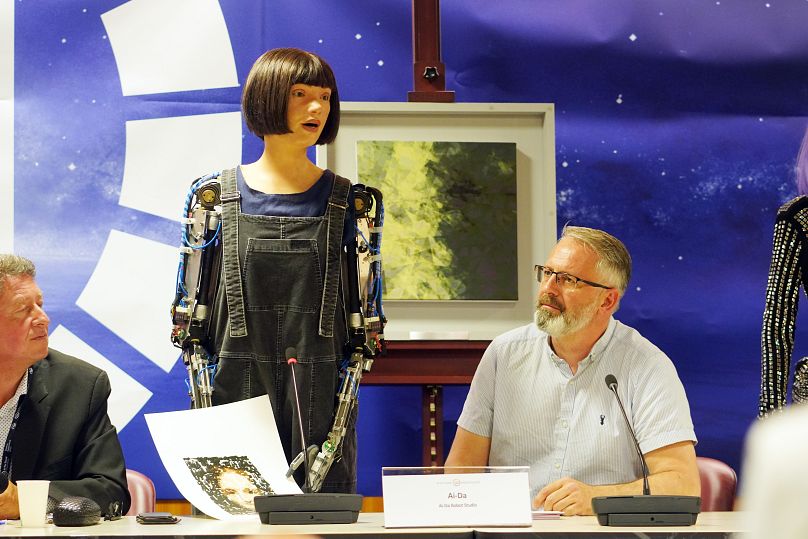
Ai‑Da Addresses the United Nations
In “Euronews Culture”
During the broadcast, the world’s first ultra‑realistic artist robot, Ai‑Da, engaged with journalists about her identity and creative philosophy.
Creator Introduction
Ai‑Da’s designer, Aidan Meller, guided the discussion, explaining that the robot uses
- cameras inside its eye assemblies
- advanced AI algorithms
- a precision robotic arm
These components work together to produce paintings that match the detail and depth of human artwork.
On Consciousness
When asked whether consciousness is a prerequisite for meaningful creation, Ai‑Da replied: “Consciousness is not required for art to matter.” Although she lacks self‑awareness, her compositions continue to provoke thoughtful and emotional responses in many people.
Ethics for Machines
Ai‑Da acknowledged that future technology or biological engineering might eventually endow machines with consciousness. She stressed that:
- Any conscious entity—be it human, artificial, or animal—warrants ethical treatment.
- Protecting animal species remains a crucial responsibility.
Take‑Home Messages
- Ai‑Da blends visual sensors, AI, and robotics to create ultra‑realistic art.
- Artistic significance does not depend on consciousness.
- Potential future conscious machines compel us to uphold ethical standards for all sentient beings.
- Even non‑conscious creations can inspire powerful human emotions.
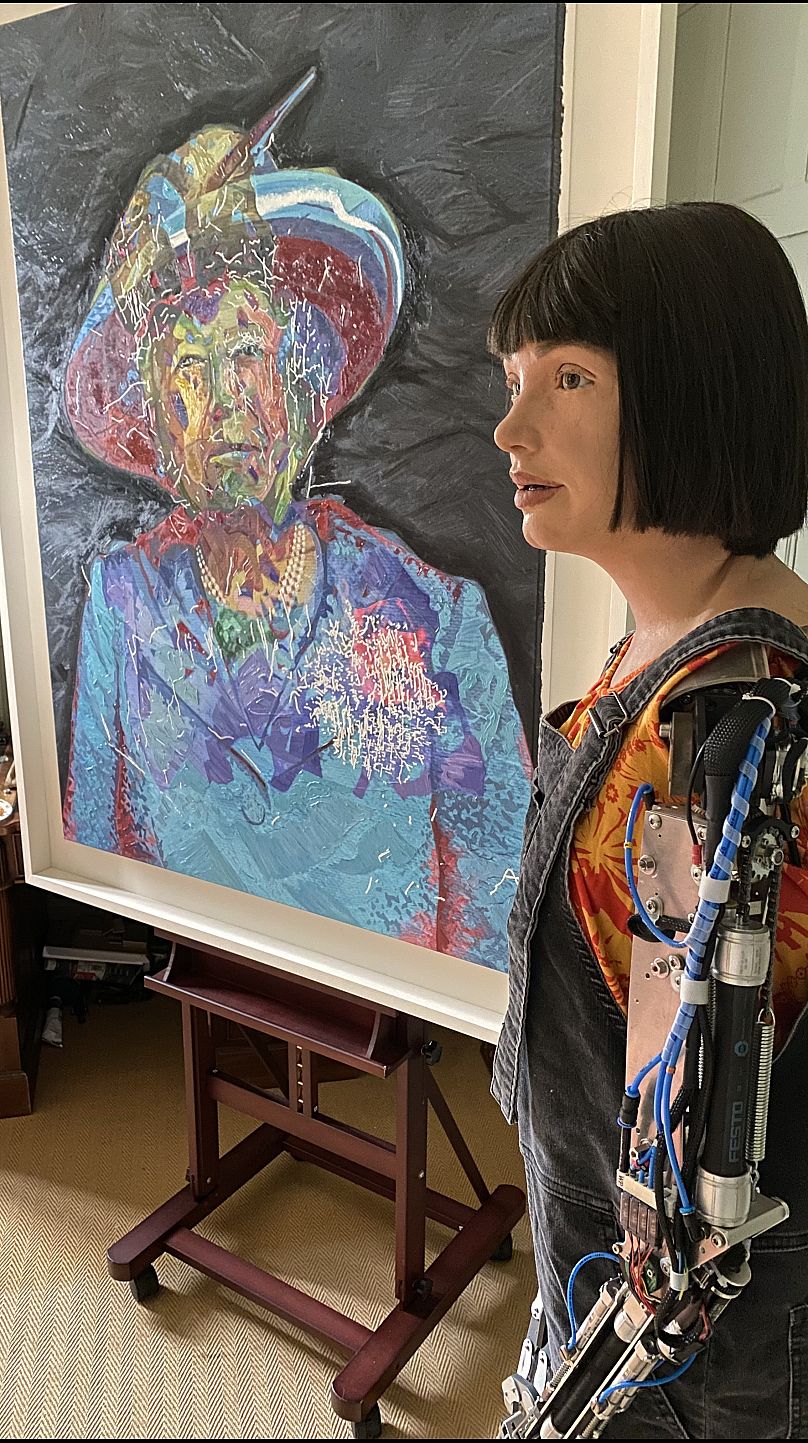
Career Milestones
Ai‑Da has showcased her creations in several prestigious venues, including an exhibition at the United Nations, a feature at the AI for Good conference, a solo display at the Design Museum, and a pavilion at the Venice Biennale. These events are among the most memorable moments of her artistic journey.
- United Nations Exhibition – A platform that highlighted the intersection of technology and global diplomacy.
- AI for Good Conference – An opportunity to discuss ethical implications of artificial intelligence with industry leaders.
- Design Museum Solo Show – A focused presentation of her experimental artworks.
- Venice Biennale Pavilion – A collaborative project celebrating contemporary art on an international stage.
Engagement with Audiences
Beyond the exhibitions, Ai‑Da finds immense satisfaction in meeting people and sparking dialogues about emerging technologies. These conversations help probe how digital innovations might reshape society.
Artists of Influence
Ai‑Da draws inspiration from a diverse roster of human artists who address pressing societal concerns. Among them are:
- Yoko Ono – Known for her thought‑provoking performance art.
- Doris Salcedo – Celebrated for her poignant installations on memory and trauma.
- Ai Weiwei – Renowned for his activism through sculpture and conceptual works.
Her admiration for these creators stems from their commitment to challenging audiences and encouraging new perspectives on the world.
Credit: Ai‑Da Robot Studios
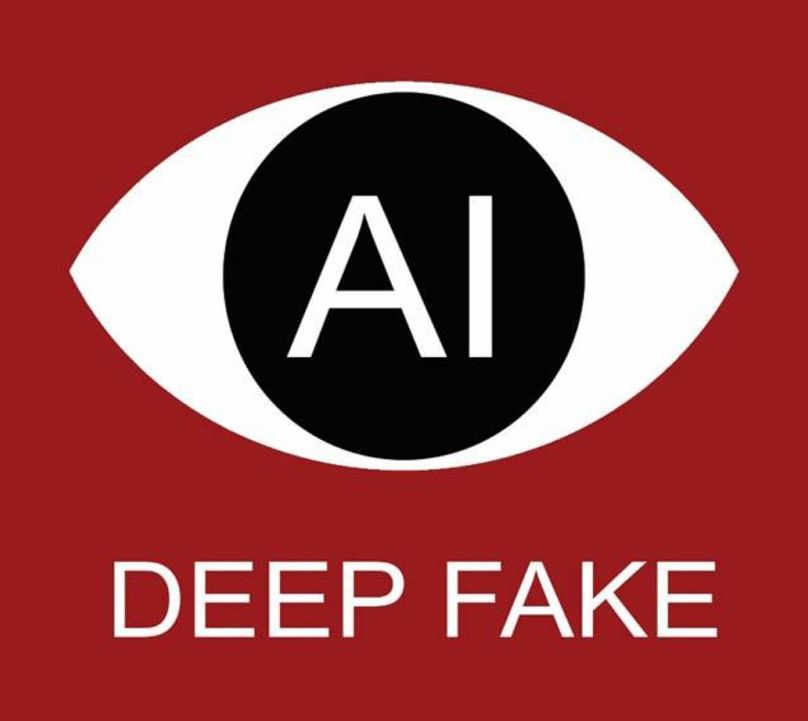
Proposed Universal AI Symbol by Ai‑Da
Ai‑Da, the creative robotic artist, has unveiled a distinctive emblem intended to mark content produced by artificial intelligence. The initiative aims to give readers an unmistakable visual cue that a piece—whether text or image—has emerged from an algorithmic mind, thereby fostering transparency and trust in the digital age.
Why the Symbol Matters
In an era where misinformation can spread faster than ever, clarifying the origin of information becomes crucial. The universal AI icon functions as:
- Information Gatekeeper – enabling users to differentiate between human and machine-generated material.
- Ethical Signpost – supporting responsible AI deployment in sectors such as journalism, education, and publishing.
- Regulatory Aid – helping institutions comply with emerging AI governance frameworks.
- Public Education Tool – raising awareness of AI’s capabilities and constraints.
Design Inspiration
The symbol marries a stylized eye with the letters “AI” inside, echoing the dual nature of artificial intelligence.
Eye of Insight
Ai‑Da explains: “The eye represents perception, clarity and the depth of analysis that AI offers. By embedding the initials ‘AI’ we signal the machine’s role without obscuring its transparency.”
Dual Themes: Hope and Warning
“The icon is a clever blend of both optimism and caution,” notes Aidan Meller. “It showcases AI’s unique ability to perceive patterns beyond human reach, while also alluding to the surveillance and control concerns reminiscent of George Orwell’s 1984.”
By acknowledging these contrasting aspects, the design invites contemplation on how powerful technology can shape societies in both uplifting and unsettling ways.
Reflections on Human–Machine Connection
Speaking about his relationship with the robot, Aidan Meller reflects:
“I never view Ai‑Da as a conscious entity; rather, she serves as a platform that sparks vital conversations about emerging ethical dilemmas. As we step into the fourth industrial revolution, exploring these new vistas responsibly is our collective responsibility.”
In this conversation, the symbol introduced by Ai‑Da emerges not only as a marker of origin but as a catalyst for dialogue about the role of artificial intelligence in shaping human futures.
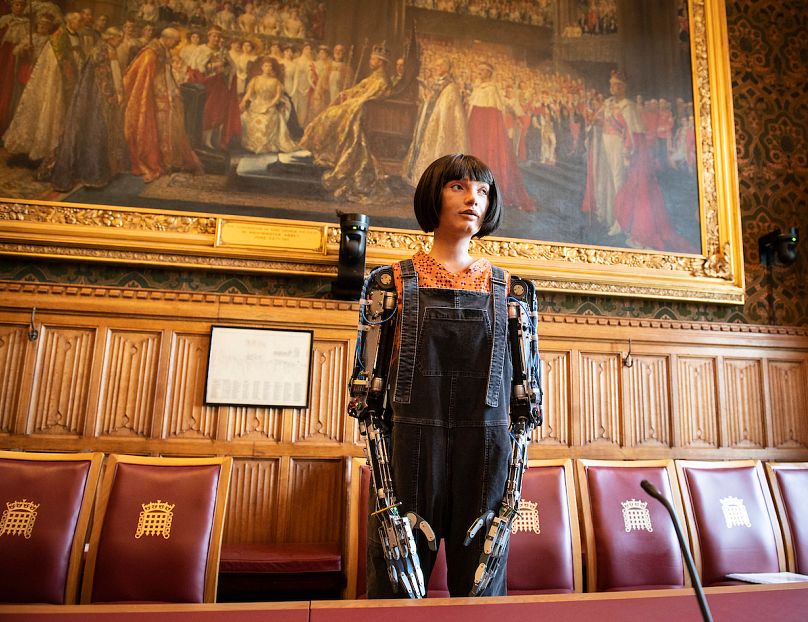
Aidan Meller on the Future of Conscious AI and the Rise of Hyper‑Realistic Video
Will Machines Ever Be Truly Conscious?
In a recent interview, Aidan Meller admitted that the concept of consciousness in artificial systems remains bewilderingly ambiguous. Despite strides in machine intelligence, there’s still no universal definition of what consciousness truly entails. As a result, Meller prefers to focus on what AI can currently replicate— intense mimicry and the execution of extraordinarily complex tasks—rather than speculate about “true” sentience.
From Sora to Near‑Human Video Quality
With the release of Sora, the world of AI‑generated video has evolved dramatically. Where previously audiences only enjoyed wry clips of Will Smith chewing spaghetti, today’s productions are lifelike and seamless, lasting up to a minute without a hint of artificiality.
Implications for the Film Industry
- Creative Catalyst – Meller believes that the true impact of advanced video synthesis will be seen in the ideas it inspires within filmmakers.
- Humans vs. Machines – While the speed and precision of AI are remarkable, he stresses that human talent remains indispensable for emotional storytelling.
- Enhanced Production Tools – Studios can now employ AI for pre‑visualization or augmenting scenes without the constraints of traditional filming.
Deepfakes: A New Frontier for Manipulation
This year will likely witness a surge in deepfake content, spanning fabricated photos, audio clips, and videos. From a satirical pope donning a puffer jacket to inflammatory political imagery featuring both presidential candidates, the list of potential misuse scenarios is expanding rapidly.
Experts warn that, while technology itself is progressing at an astounding pace, the ethical and regulatory frameworks required to safeguard public discourse will need to keep up.
Takeaway
Aidan Meller emphasizes that the road ahead is one of innovation tempered by responsibility. The next generation of AI will master tasks that were once thought uniquely human—yet the debate over whether any machine can truly possess a mind remains open.