Moldova Pride Targeted by Fake Charlie Hebdo Cover Circulating Online
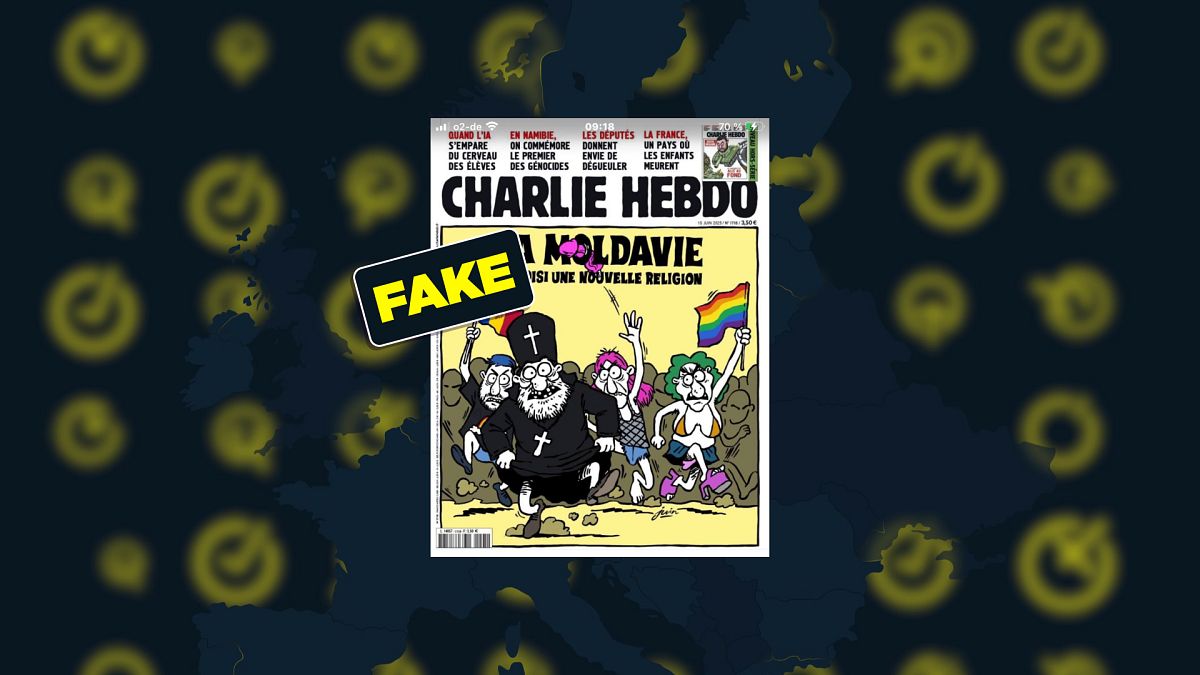
Disinformation Spread by False Front Covers
What Is Happening
False front covers that are incorrectly linked to a well‑known French satirical magazine are acting as a modern vector for misinformation. These fake images are often circulated across social media and news feeds, giving unsuspecting audiences a sense of authenticity.
Why It Matters
- They trick people into following links that lead to misleading or harmful content.
- They erode trust in credible news sources by mimicking reputable design.
- They are easy to share, amplifying their reach beyond traditional media channels.
How to Spot Them
When you encounter a cover that claims to belong to the satirical magazine, check the following:
- Verify the source: Look for an official website or known publication channel.
- Inspect details: Subtle design inconsistencies often reveal a false front.
- Check links: Hover over and verify URLs before clicking.
Take Action
Users can help by reporting suspect covers and sharing trustworthy sources. Media literacy is key to safeguarding against this form of disinformation.

Charlie Hebdo Targeted by Pro‑Russian Propaganda in Moldova
The Viral Image
In a recent campaign, pro‑Russian actors used the likeness of the French satirical magazine Charlie Hebdo to launch a new attack on the LGBT community in Moldova.
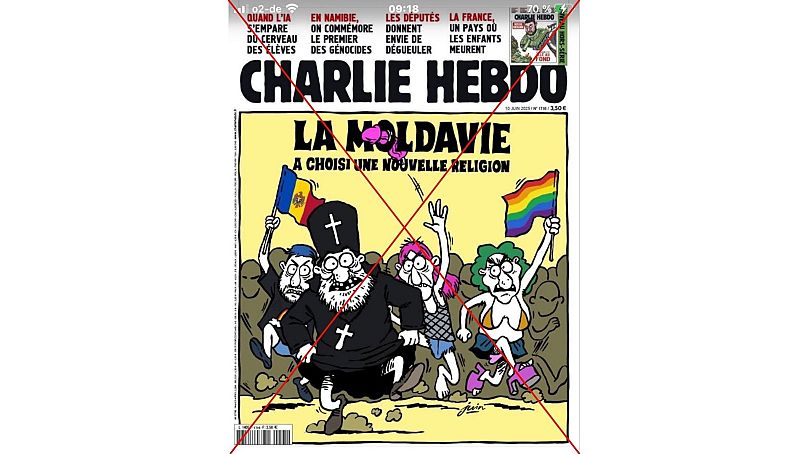
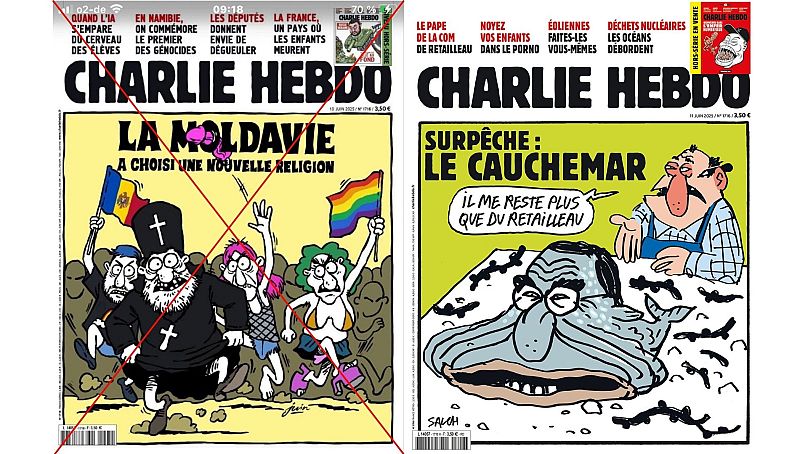
The circulated graphic—shared widely on Telegram and other social media platforms—claims that “Moldova has chosen a new religion.” In the illustration, a crowd at the country’s pride march clutches rainbow flags alongside Moldovan national banners, while an Orthodox priest is shown being pushed away.
Public Reactions
- “The priest is being chased by a crowd of crazed perverts.”
- “Moldova is being pulled toward Europe, whose religion is sodomy.”
These comments illustrate the hostility directed at both the LGBT movement and traditional religious figures within the context of a broader political narrative.
False Claims About a Charlie Hebdo Cover Unveiled
Background
Recently a photograph circulating online claimed to depict a Charlie Hebdo front page labeled Edition 1716 with a publication date of 10 June. According to the post, the cover allegedly advertised Moldova’s Pride celebrations.
Fact‑Checking the Source
- Visiting the official Charlie Hebdo website shows no issue released on 10 June.
- The closest match is the original edition 1716 published on 11 June, featuring a completely different front cover.
- The wrongly shared image does not match the authentic cover in any respect.
Content of the Genuine Issue
Instead of speaking about Moldova, the real 11 June edition contains satirical commentary aimed at France’s interior minister Bruno Retailleau. Retailleau, also the head of the conservative Les Républicains party, has long opposed LGBT rights, notably voting against the 2013 law that legalized same‑sex marriage in France.
Conclusion
The front‑cover image that drones across social media is a fabrication. It misleads readers into believing the magazine addressed a foreign event, while in reality it targeted a domestic political figure known for his anti‑LGBT positions.
Unpacking the False Narrative Surrounding Moldova’s Pride March
On 15 June, Moldova celebrated a Pride march that was quickly surrounded by a wave of misinformation claiming violent police action and an anti‑LGBT agenda. A broader controversy unfolded when a satirical front cover by Charlie Hebdo was misconstrued as mocking the LGBTQ community, when in fact it was targeting a former opponent of the publication in its official edition.
Origins of the Disinformation
- Early rumors portrayed a peaceful rally—“traditional family values”—as being violently broken up by security forces.
- Spanish‑language media cited President Maia Sandu and Brussels’ endorsement as driving forces behind the march, implying a clash with “Christian family values.”
- These allegations were later dismissed by verified sources.
The Truth According to EUvsDisinfo
The European external disinformation taskforce clarified that:
- The Party of Socialists of the Republic of Moldova attempted to cross the police cordon that separated them from the Pride march.
- Authorities had engineered alternate routes to keep the groups apart, successfully averting confrontation.
- The police response was described as “firm but fair.”
According to the report, the story had been shaped to play upon homophobic sentiments, casting local LGBTQ initiatives as a hostile EU imposition on “national” or “Christian” values—an approach commonly employed in pro‑Kremlin disinformation campaigns.
Implications for European LGBTQ Communities
While the narrative suggested a stark opposition between LGBTQ rights and Christian traditions, many believers across Europe find harmony between their faith and sexuality. The claim that LGBTQ activism threatens traditional values is therefore misleading.
Related Discussion
—No, Charlie Hebdo did not produce an issue featuring Zelenskyy as a caricature of Quasimodo
—Fake Charlie Hebdo cover depicting Zelenskyy exploiting Pope Francis’ death for profit
What other fake Charlie Hebdo issues are out there and why?
Pro‑Russian Misinformation Leveraging Fake Charlie Hebdo Covers
How the satirical magazine’s imagery is being weaponised
Recent findings show that copies of Charlie Hebdo featuring fabricated front covers are so pervasive that the magazine’s official website now warns readers that “pro‑Russian actors are exploiting the outlet’s likeness to circulate propaganda.”
EuroVerify’s role in debunking the spread
EuroVerify has already exposed several falsified issues, most of which centre on Ukrainian President Volodymyr Zelenskyy. These fake publications were designed to tarnish the leader’s reputation and weaken European backing for Ukraine.
- Accusation linked to Pope Francis’s death – a spoof issue claimed Zelenskyy had taken advantage of the late Pope’s passing; the claim is entirely fabricated.
- Mockery surrounding Notre Dame’s reopening – another false cover alleged that Zelenskyy tried to use the Paris cathedral’s reopening to rally support for Ukraine against Russia. This narrative was deliberately concocted to distract from genuine political developments.
- Targeting Moldova – disinformation campaigns frequently aim at Moldova, urging the country to forgo closer ties with European partners and, ultimately, to abandon its ambitions to join the EU.
Impact on public perception
The overarching goal of these fabricated publications is clear: to erode confidence in Zelenskyy’s leadership and destabilise Western support for Ukraine, while also undermining Moldova’s path toward European integration.
Takeaway
Consumers of online news must remain vigilant. Recognising the signatures of fake cultural and political imagery—especially those from well‑known satirical outlets—helps guard against misinformation that seeks to manipulate public opinion and geopolitical alliances.