Shock Poll Shows Romanians’ Nostalgia for Ceaușescu – The Controversial Romanian Leader
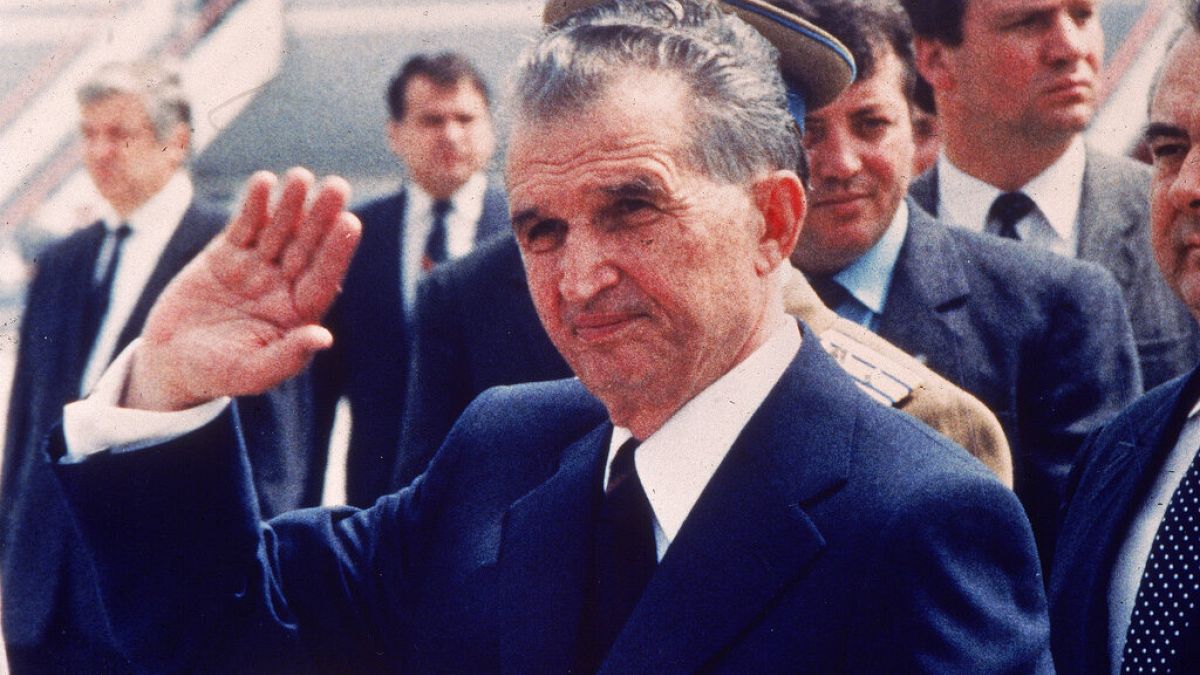
Survey Finds Majority of Romanians View Ceaușescu Positively
Key Findings
- 66.2% of respondents believe Nicolae Ceaușescu was an effective leader.
- The survey highlights ongoing support despite the regime’s authoritarian nature.
- Respondents cited perceived economic stability and national pride as reasons for their stance.
Context
The assessment reflects a persistent sentiment that, in the eyes of many Romanians, the benefits of Ceaușescu’s policies outpaced the negatives of his repressive governance. The results suggest a complex legacy, with historical narratives still influencing public opinion.

Unexpected Findings in Romanian Public Opinion
The latest INSCOP survey reveals a surprising trend: a majority of Romanians view Nicolae Ceaușescu‘s era as a period of improved welfare and strengthened national cohesion.
Key Statistics
- 66.2% of respondents believe Ceaușescu was an effective leader.
- Only 24.1% express a negative assessment.
- 55.8% consider the Communist rule to have been beneficial for the country.
- 34.5% disagree with that perception.
- A striking 80% recognize the absence of personal freedoms during that time.
- Only 9% think liberties were greater then.
Methodology
The data collection involved telephone interviews with a sample of 1,505 adults (18+), ensuring a representative snapshot of current sentiments.
Contextual Considerations
Ceaușescu’s authoritarian regime stands out as the sole Central European government that concluded with violent upheaval and a late‑1980s revolution. In a nation now integrated into both the EU and NATO, these insights are striking.
Possible Drivers Behind Nostalgia
Many respondents attribute their sentiment to selective nostalgia for a perceived simpler past, a sentiment that recent Russian propaganda appears to have amplified.
Decline and fall
Revolution in Romania: The Fall of Ceaușescu
Nicolae Ceaușescu ruled Romania from 1965 until the dramatic collapse of his regime in December 1989. This moment marked the final phase of the Cold War, as communist governments across Eastern Europe were either peacefully dissolving or abruptly tumbling, signaling the end of the Yalta Order.
Prelude to the Uprising
- 21 December: After weeks of violent repression in Timișoara, the dictator was scheduled to address a crowd of 100,000 supporters in central Bucharest.
- Expectation vs. Reality: The crowd soon turned from cheers to boos, reflecting widespread exhaustion with years of misery and oppression.
- Police forces opened fire on the demonstrators, igniting a chain reaction of civil unrest.
Escape and Execution
- Within 24 hours, Ceaușescu and his wife Elena fled Bucharest, seeking refuge from the escalating chaos.
- They were captured in Târgoviște—approximately 70 kilometers from the capital—and executed on 25 December 1989.
- According to official accounts, a military court delivered a death sentence after a one‑hour summary judgment. The order came from the newly established National Salvation Front Council, created on 22 December, the day following the initial unrest in Bucharest.
This series of events effectively erased the last vestiges of communist leadership in Romania, closing a dark chapter that had spanned nearly three decades.
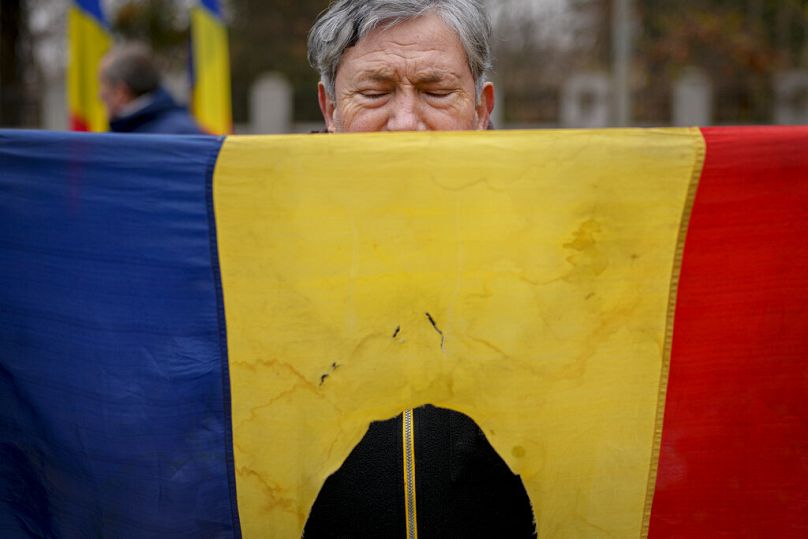
Man Embraces the 1989 Flag Amid Reverence at Bucharest’s Heroes’ Cemetery
Setting the Scene
In the heart of Romania’s capital, the Heroes’ Cemetery stands as a testament to the nation’s enduring spirit. This historic burial ground is a place of both quiet reflection and annual commemorations, where the stories of those who served—and those who lived through the country’s revolutionary year of 1989—are kept alive.
The Moment Captured
- A solemn individual is shown holding the 1989 flag, the banner that symbolized a turning point in Romanian history.
- The man’s posture and facial expression convey a profound reaction to the present moment, as if acknowledging the significance of the flag’s presence.
- The background showcases the solemn marble arches and the surrounding park, adding depth and solemnity to the image.
Why This Flag Matters
The 1989 flag, once a beacon of hope during the revolution, has since become a revered object of remembrance in Bucharest. Its display at the cemetery offers a powerful reminder of the nation’s resilience and the sacrifices made by generations of its people.
Photographic Contribution
Captured by photographer Vadim Ghirda, this image is part of a broader series documenting moments of national significance. The photograph is archived under the 2022 collection of The Associated Press, safeguarding the memory of the moment for posterity.
Timișoara’s mutiny, the spark that lit the flame
Timișoara’s 1989 Uprising
Origins of the Protest
On 16 December 1989, a modest gathering of the Hungarian minority in the western Romanian city of Timișoara marched to voice their discontent over the regime’s harsh treatment of the ethnic Hungarian Protestant pastor László Tőkés, who had openly criticized the communist system on Hungarian television.
From Small Demonstration to Mass Revolt
- The city’s residents joined the initial march, amplifying its scale.
- Supporters stormed the local headquarters of the Communist Party and shattered symbols associated with Ceaușescu’s cult of personality.
Violent Suppression and Outrage
On 17 December, the army and the feared Securitate unleashed gunfire upon the demonstrators, resulting in dozens of casualties. Yet the populace remained defiant, continuing their resistance against the communist regime.
End of Repression and Liberation
By 20 December, after three days of brutal repression, the army withdrew from the city. Timișoara emerged free from communist rule, marking a pivotal victory for the revolutionaries.
Impact Beyond the City
The momentum and spirit of Timișoara’s uprising reverberated throughout Romania, reaching the capital of Bucharest and ultimately setting the stage for the collapse of the Ceaușescu regime.
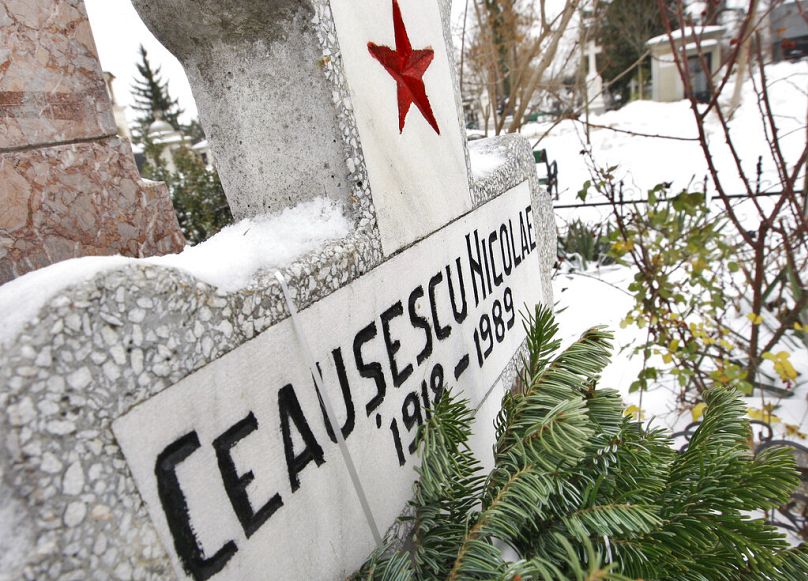
Cultural Memorial: Nicolae Ceausescu’s Tomb in Ghencea
On Wednesday, December 16, 2009, a solemn visit was taken to the burial site of the former communist leader Nicolae Ceausescu at Ghencea Cemetery in Bucharest, Romania.
Key Details
- Location: Ghencea Cemetery, Bucharest
- Date: December 16, 2009
- Historical Context: Ceausescu was executed by firing squad in 1989
- Photo Source: Anonymous/AP 2009
Contextual Significance
The gravestone serves as a reminder of a turbulent period in Romanian history. Visitors often pause to reflect on the circumstances that led to Ceausescu’s downfall during the revolutionary upheavals of 1989.
Contemporary Reflection
While the site continues to attract those interested in political history, it also stands as a solemn reminder of the consequences of political dictatorship and its impacts on a nation’s moral and societal framework.
Root causes of economic turmoil
Determining the Fall of Ceaușescu’s Regime: A Multifaceted Analysis
*1. Internal Pressures and the Collapse of Public Confidence
*By the late 1980s, the Romanian populace had endured a prolonged period of stringent economic restraints and escalating oppression of basic liberties. The regime’s reliance on a cult of personality stifled dissent and eroded legitimacy. Propaganda repeatedly portrayed Ceaușescu as a mythical savior, labeling him the “Genius of the Carpathians” and “Conducator”—titles that echoed those of Ion Antonescu, the wartime fascist leader. This historic association intensified public distrust and fueled the desire for reform.
2. External Shifts: The Cold War’s End and Its Repercussions
*- Conclusion of the Cold War diminished the ideological support traditionally granted to Eastern Bloc regimes.
- Global economic integration exposed Romania to competition and exposed the inefficiencies of its autocratic model.
- Regional isolates like the fall of East Germany provided concrete examples of successful transitions.
3. Systematisation – A Distorted Vision of Progress
*Following the devastating 1977 earthquake, Ceaușescu embarked on an ambitious urban and agricultural overhaul inspired by Mao Zedong’s and Kim Il‑sung’s doctrines. The project, known as “systematisation,” sought to:
- Replace villages with new rural hubs.
- Rebuild cities—most notably Bucharest, the Banat, and Transylvania—into modernized industrial centers.
- Pave the way for widespread collectivisation within Romanian society.
These reforms, however, were economically prohibitive for a nation ridden by heavy foreign debt. The forced relocations and demolitions alienated millions, while the central planning machinery failed to generate the promised prosperity.
4. Repression, Resistance, and the Rise of Underground Opposition
*In response to growing unrest, Ceaușescu intensified political suppression, targeting every form of protest. The underground movement accused him of being the “Danube of the Thought,” a symbolic critique of his irrational policies. Their persistent, covert activities highlighted the regime’s untenability and slowly eroded public support.
5. Legacy: Lessons from a Regime’s Downfall
*The fall of Ceaușescu’s dictatorship illustrates how a combination of internal mismanagement and external geopolitical shifts can precipitate the demise of authoritarian governments. Key takeaways include:
- Economic sustainability is essential for social upheaval to be contained.
- Overreliance on propaganda can backfire when genuine civic needs are ignored.
- Independence from global political currents is increasingly difficult in an interconnected world.
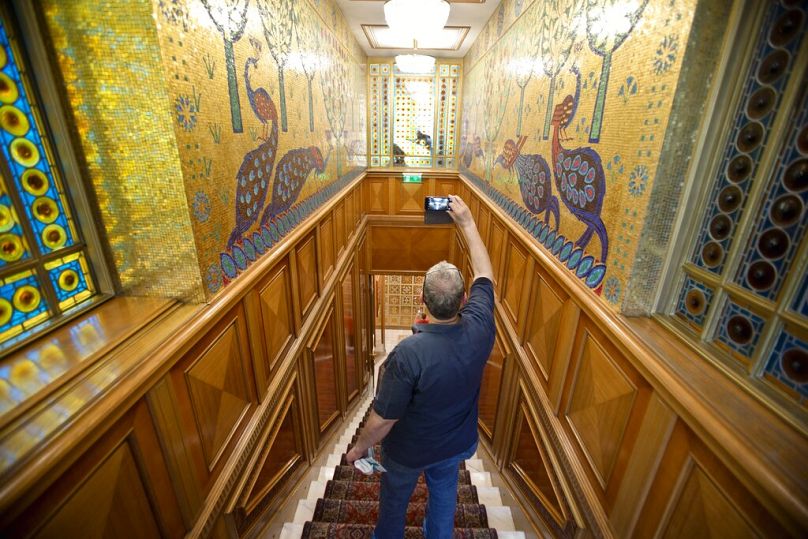
Exploring the Former Residence of Nicolae Ceausescu
During a recent guided visit to Bucharest, a tourist captured images inside the historic home once occupied by former Romanian communist leader Nicolae Ceausescu. Locally referred to as the “Palace of Spring,” the building now serves as a museum offering insight into the nation’s past.
Highlights of the Tour
- Historic Decor: Visitors experience period furnishings that once graced the dictator’s personal chambers.
- Exhibit Rooms: Each section showcases artifacts linked to Ceausescu’s reign, providing educational context.
- Narrative Guides: Expert guides narrate the dramatic history surrounding the palace, deepening understanding.
Visitor Experience
The photo taken by the tourist reflects the blend of historical reverence and modern curiosity that characterizes the site. The Palace of Spring offers a palpable sense of the era’s architectural grandeur, allowing spectators to step back into Romania’s complex political past.
Harsh repression and dystopia
Repressive Governance
Enforcement Structure
- The state established an extensive network of informants under the Securitate, ensuring full coverage of society.
- All communications were intercepted and strictly supervised by security officials.
- Every typewriter within the country was cataloged by the authorities to monitor written correspondence.
Surveillance and Control
With its powerful apparatus, the Securitate possessed unrestricted authority to use torture, to eliminate dissent—whether domestically or abroad—and to suppress opposition. Targeted groups included artists, intellectuals, and ethnic minorities, all of whom faced systematic persecution.
Political Repression
The regime applied harsh measures against dissenters, ensuring that any form of resistance could not endure. The combination of surveillance, intimidation, and decisive action left little room for opposition to flourish.
Population Policies
- Women were prohibited from accessing contraceptives or obtaining abortions, a policy aimed at boosting population growth and securing a future labor force.
- Authorities imposed strict control over pregnancies, monitoring and managing reproductive choices.
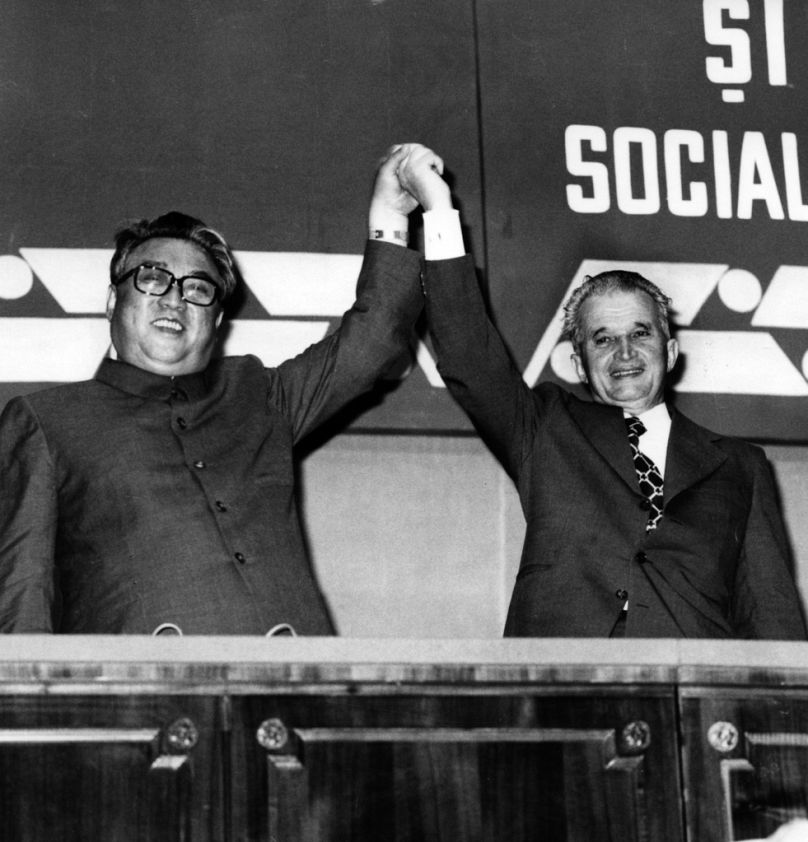
Historic Meeting Captured in 1984
Event – A photograph taken on June 20, 1984 showcases the close ties between the North Korean ruler Kim Il Sung and the Romanian leader Nicolae Ceausescu.
- The image originates from the Korean Central News Agency, an official outlet of North Korea.
- Distribution was handled by the Korea News Service, ensuring wide circulation.
- It reflects the diplomatic rapport between two powerful regimes during the Cold War era.
Copyright Information – The photograph is protected under the original copyright held by 1984 Associated Press (AP). Unauthorized publication, broadcast, or distribution is prohibited.
Multifaced dictator
Reassessing Ceaușescu’s International Standing
In the late 1970s and early 1980s, Nicolae Ceaușescu maintained a notable degree of political clout abroad.
The Western world viewed him as a distinct voice that resisted Moscow’s hegemony within the Warsaw Pact, especially after Romania opted not to deploy troops in Prague during the 1968 crackdown.
Romania’s Divergent Foreign Strategy
- From the late 1960s, Ceaușescu steered Romania’s diplomacy in a direction that frequently conflicted with Soviet expectations for its satellite states.
- This opened avenues for diplomatic engagement with both the United States and China under Mao, the latter being an ideological rival to Moscow.
- His policies even helped pave the way for the historic rapprochement between China’s Mao and Zhou Enlai, and the United States’ Nixon–Kissinger partnership.
Economic Maneuvers on the International Stage
Romania leveraged its unique stance to secure foreign financing from Western banks, becoming one of the rare socialist countries admitted to the IMF in the early 1970s.
In 1974, it also became the sole socialist nation to sign a preferential tariff agreement with the European Community, which would later evolve into the European Union.
The oil shock of 1972 amplified Romania’s influence in global markets.
With modest crude production and favorable contracts with Iran and Iraq, the country profited heavily from the soaring oil prices, which bolstered Ceaușescu’s domestic agenda.
Welfare and Consumption Boom
During the 1970s, the regime introduced expansive economic measures that yielded positive outcomes for its citizens.
For the first time, the Romanian populace experienced widespread consumer goods access and a comparatively generous welfare system.
Austerity and Its Consequences
- By the early 1980s, falling oil revenues, coupled with ill-advised fiscal strategies, forced Romania into stringent austerity measures aimed at eradicating external debt.
- The ensuing decline in productivity and widespread impoverishment, coupled with existing political repression, culminated in the violent overthrow of the regime in 1989.