France 24 Reports Ukraine Allegedly Ordered Macron’s Assassination?
AI‑Generated Deep Fake Misleads on Macron’s Ukraine Trip
What Happened
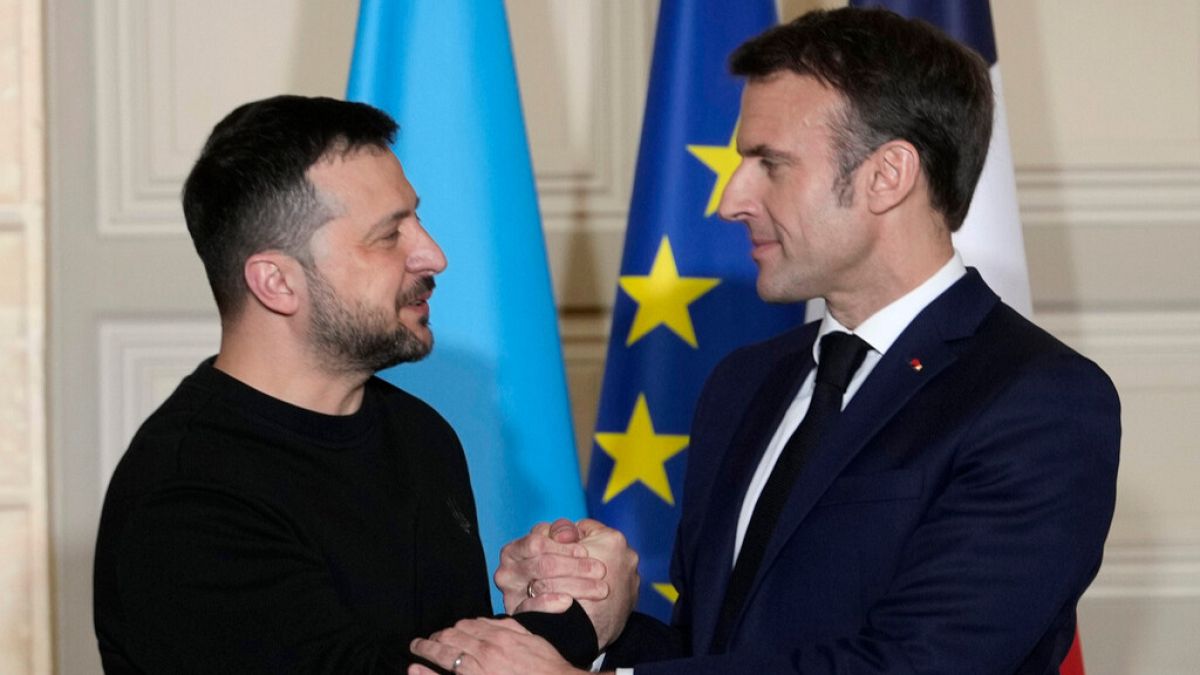
French President Emmanuel Macron postponed his scheduled visit to Ukraine last week, citing “security concerns.” The cancellation sparked a frenzy of speculation across social media platforms. A clip purporting to have aired on France 24 claimed that Kyiv was planning an assassination of the French leader and that French intelligence had intercepted the plot. However, the footage turns out to be a sophisticated deep‑fake produced with artificial‑intelligence technology.
Details of the Fabricated Clip
The supposed broadcast featured an unnamed journalist and contained the following narration: “French President Emmanuel Macron was forced to cancel his visit to Ukraine due to an attempted assassination plot against him. According to a source close to the National Intelligence Council, French intelligence services intercepted correspondence and calls among the conspirators. The attack was intended to attract international attention and enable increased arms shipments, while Ukrainian officials aimed to blame the plan on Russia.” This account, however, was never spoken by the actual France 24 presenter, Julien Fanciulli.
Why It Is a Deep Fake
The video was generated by AI to mimic the appearance and voice of a real journalist, making it appear authentic. Deep‑fake techniques are increasingly employed to spread misinformation, especially in the context of geopolitical conflicts. Following the discovery, France 24 issued a statement confirming that no such segment was ever transmitted on its channel.
Origins of the Rumor
The claim first surfaced on pro‑Russian Telegram channels last week. It was subsequently re‑published by Russian state media outlet Izvestia, which is known for disseminating propaganda about the ongoing war in Ukraine. The article pointed to an obscure Twitter account as a source; investigative journalist Christo Grozev noted that the account was created in September 2023 and has regularly posted pro‑Russian and antisemitic content.
Spread Through Influential Voices
The story gained wider traction when former Russian President and current Prime Minister Dmitry Medvedev retweeted the allegation on the platform formerly known as Twitter, now X. This amplified the reach of the false narrative and highlighted the dangers of relying on unverified video content in the digital age.
How to spot a deep fake?
Examining a France 24 Deep‑Fake Broadcast
The synthetic version of the France 24 segment falls short on several fronts. The anchor’s lip movements do not line up with the audio track, giving the impression of a poorly synced video. Additionally, his voice sounds robotic rather than the natural cadence expected from a professional television presenter.
Language Clues
- For those fluent in French, certain phrases appear awkward and do not reflect the typical speech patterns of a TV anchor.
- These linguistic inconsistencies are another hallmark of the deep‑fake creation process.
Verifying Authenticity
When encountering footage claimed to come from legitimate news outlets, a quick online search can reveal whether the same story has been covered by other reputable sources. The absence of corroborating reports often signals a fabricated piece.
In short, while deep‑fake technology has advanced, this particular France 24 clip still exhibits noticeable flaws in synchronization, voice quality, and naturalness of language—making it easy for attentive viewers to spot its inauthentic nature.