
Port of Baku: Propelling Eurasian Trade Through Rapid Expansion and Growth
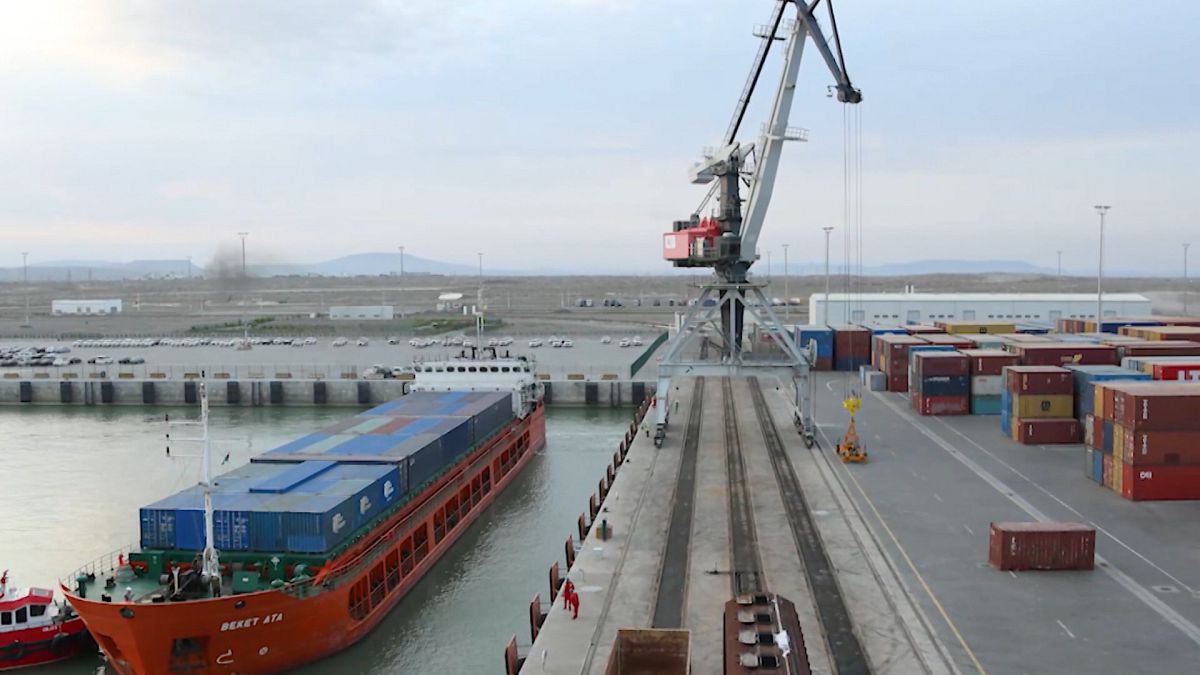
Port of Baku’s Modernization: Growth Meets Sustainability
Strategic Positioning in the Caspian Sea
The Port of Baku lies at a pivotal point along the Caspian Sea, positioning it as a key facilitator for international trade.
Expansion to Serve Global Demand
Recent development plans are set to enlarge the port’s capacity, enabling it to accommodate the increasing flow of global commerce.
Commitment to Sustainability
- Eco‑Friendly Operations: Implementation of green technologies to reduce carbon emissions.
- Time‑Sensitive Initiatives: Accelerated construction of energy‑efficient infrastructure.
Community‑Focused Investments
The expansion projects also prioritize local development, offering new opportunities for community growth and economic diversification.

Port of Baku: A Revitalised Hub for 21st‑Century Trade
The Port of Baku stands as the oldest and most strategically located seaport on the Caspian Sea. Nestled on a traditional trade corridor that stretches from the East to the West, it has become a magnet for transport, logistics, and global connectivity.
Leadership Vision
Director‑General Taleh Ziyadov highlighted the intensified importance of supply chains amid current global disruptions and conflicts. “Given its position at the heart of Central Eurasia, the Port of Baku has become a key connector in every direction,” he said. “Today, it is re‑emerging as a premier 21st‑century hub, linking continents while driving regional economic growth.”
Performance Highlights
The port’s mission is clear: adapt, grow, and respond to escalating global trade needs. Last year, cargo throughput surpassed 7.3 million tonnes, reflecting a 51% rise since 2020. Ziyadov noted, “Our highly efficient operational team operates under strict KPIs, speeding cargo handling and earning the trust of numerous international clients.”
Infrastructure and Pipelines
Located in Alat, about 70 km from Baku’s capital, the port boasts 13 berths—including roll‑on/roll‑off (Ro‑Ro) docks, a ferry terminal, and general cargo facilities. Terminals handle consumer goods, automobiles, and commodities, while a new fertiliser terminal is under development. This will feature warehouses capable of storing 60,000 tonnes of varied fertilisers.
Technology & Digitalisation
Chief Operating Officer Eugene Seah emphasized the port’s commitment to digitalisation and automation. “Technological integration is essential to our development plan; we are working closely with regional partners to ensure seamless adoption.”
Environmental Sustainability
The port is actively reducing its ecological footprint. Key initiatives include:
- A wastewater treatment plant using Rotating Biological Contactor (RBC) technology, with five modules each capable of treating 500 m³ of sewage per day—adequate for up to 2,500 employees.
- Membership in the UN Global Compact and an aim for zero carbon emissions by 2035.
- Comprehensive carbon footprint analysis revealing that vessel emissions account for approximately 60 % of total carbon output, followed by truck and equipment emissions.
- A strategic blueprint aiming to cut emissions to zero within 15–20 years.
Beyond Port Operations
The neighboring Alat Ecopark extends green initiatives, featuring energy‑efficient infrastructure. The port has also introduced a robotics and coding program for local schoolchildren, nurturing future technology experts.
Wildlife and Green Spaces
More than 40 bird species thrive in the harbor basin, including 200 flamingos that annually migrate from Africa. The port has planted over 60,000 trees and plants and plans to add another 100,000 in Alat by 2025. Collaborations with Ada University explore projects such as drip irrigation to enhance greenery and create wildlife buffer zones.
Future Outlook
With plans for expansion underway, the Port of Baku is striving to cement its position as a global leader in trade and logistics. Director‑General Ziyadov affirms, “The next five years will be highly positive. International businesses are gradually engaging with our supply chain, eager to expand their presence.”
By blending robust logistics infrastructure, cutting‑edge technology, and a steadfast environmental ethos, the port is poised to thrive at the crossroads of global commerce.