Lego Announces Vietnam Factory that Creates Toys with Zero Emissions

Solar Power Sets a New Benchmark for Sustainable Manufacturing in Vietnam
Projected to become a model of green industrial progress, the new plant’s deployment of 12,400 solar panels and a robust energy‑storage system is expected to inspire a wave of eco‑friendly production across the country.
- 12,400 state‑of‑the‑art solar panels covering the main production facility.
- Complementary energy‑storage system ensuring continuous power supply and reduced reliance on the national grid.
- Reinforces Vietnam’s commitment to low‑carbon manufacturing standards.
- Serves as a practical reference for future factories aiming to adopt renewable energy solutions.

Lego Launches Eco‑Friendly $1 billion Factory in Vietnam
On Wednesday, the iconic toy maker opened a new production site in Binh Duong, a suburb of Ho Chi Minh City. The venture, valued at €906 million, marks the first plant in Vietnam to pledge a fully renewable‑energy operation.
Key Facts at a Glance
- Location: Industrial zone, Binh Duong, Vietnam
- Investment: $1 billion (€906 million)
- Goal: Zero net emissions by early 2026
- Scale: Sixth factory worldwide, second in Asia
- Output: Colorful bricks for Southeast Asia’s growing market
Business Impact
Designed with state‑of‑the‑art machinery, the facility will accelerate Lego’s expansion into Southeast Asian markets, where demand for high‑quality playsets continues to climb.
Corporate Vision
In a statement to the Associated Press, CEO Niels Christiansen emphasized that the company’s commitment extends beyond business. “We want the planet we pass on to children to still be alive and functional,” he said.
The Lego factory will be powered entirely by clean energy
Lego’s Factory Embarks on a Greener Future
Emissions‑Reduction Milestones
Lego’s dedicated manufacturing site is pivotal in the company’s climate‑action strategy. The goal is a 37 % cut in greenhouse‑gas emissions by 2032, a stepping‑stone toward the broader ambition: a carbon‑neutral future by 2050.
Investment in Sustainable Materials
To move beyond conventional oil‑derived plastics, the privately‑owned group has committed more than $1.2 billion (€1.09 billion) to research and development of eco‑friendly alternatives.
Key Focus Areas
- Innovative biodegradable polymers
- Recycling‑centric production processes
- Strategic partnerships with material scientists
Challenges Encountered
Despite substantial funding, the transition to greener materials is proving complex, with several projects still falling short of their sustainability targets.
Vietnam’s Lego Plant: A Model of Sustainable Manufacturing
Location: Binh Duong Province, Vietnam.
Clean Energy Investment
- Installation of 12,400 solar panels to power the facility.
- Integration of a robust energy storage system to balance supply and demand.
- Aiming to set a standard for factories across the country’s push toward net‑zero emissions by 2050.
Production Process
- Colored plastic granules are meltingly heated to create a uniform mixture.
- The molten plastic is then injected into metal molds to form the characteristic blocks.
- Highly automated equipment operates with precision down to a tenth of a millimeter, ensuring consistent quality.
- Robotic conveyors then package and shipment-ready the bricks.
Operational Highlights
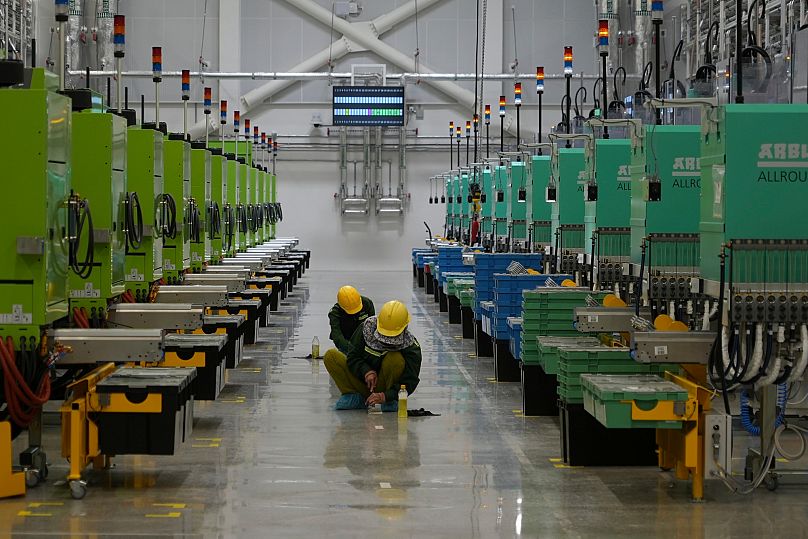
While workers meticulously scrub and maintain the factory floor, the facility’s advanced machinery continues to produce reliable, high‑quality Lego bricks. The combination of renewable energy and cutting‑edge automation exemplifies how manufacturing can advance while contributing to a cleaner, more sustainable future.
Expansion of Lego’s Vietnam Plant Signals Shift in Manufacturing Focus
Location: Binh Duong province, Vietnam
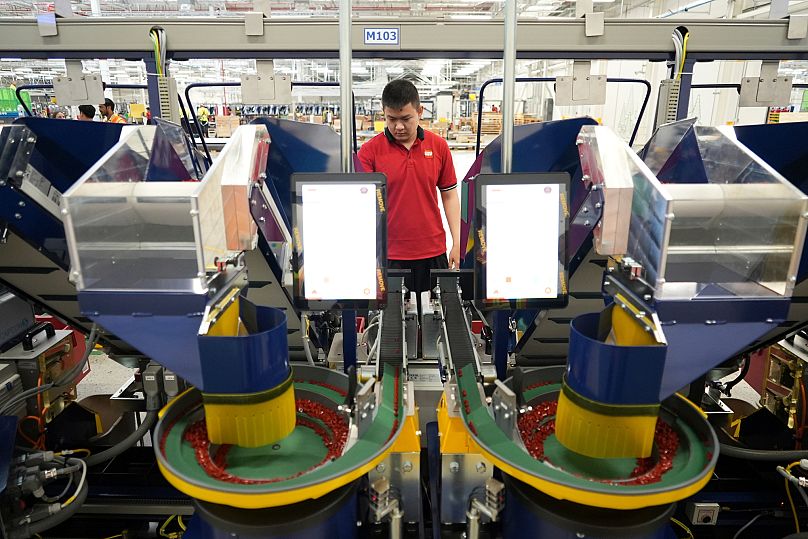
Recent images show a Lego employee operating packing machinery at the new facility, a part of the company’s broader strategy to accelerate production in Southeast Asia.
Workforce Development
- The factory will eventually support thousands of skilled operators.
- Some workers have already received training at Lego’s eastern China plant.
- Hands‑on sessions ensure consistency across global operations.
Impact on Vietnam’s Economy
- Manufacturing contributes roughly 20% to national GDP.
- Energy demands stand at 50% of the country’s total consumption.
- Lego’s expansion aligns with Vietnam’s goal to eliminate coal‑based power by 2040.
Strategic Outlook
By investing in Vietnam’s labor market, Lego not only expands its production capacity but also supports the country’s transition toward cleaner energy sources.
A ‘blueprint’ for more planet-friendly factories
Lego’s Massive Factory Sets Sustainability Standard
Highlights
- Spanning an area of 62 football fields, the factory serves as a model for large-scale, eco‑friendly production.
- The project demonstrates how significant corporations can invest in renewable energy without sacrificing profitability.
- New regulations for 2024—direct power purchase agreements—enable international firms to acquire clean electricity straight from renewable generators.
Insight from Mimi Vu
“It sometimes requires a leader like Lego to take the leap, showing that these ventures are both viable and profitable,” commented Mimi Vu, founding partner of Raise Partners in Ho Chi Minh City.
What the Direct Power Purchase Agreement Means
A DPPA allows large foreign enterprises to buy renewable energy—solar or wind—directly from producers, meeting stringent clean energy mandates while simplifying supply chains.
Lego’s Binh Duong Plant Leverages Solar Power and Battery Storage
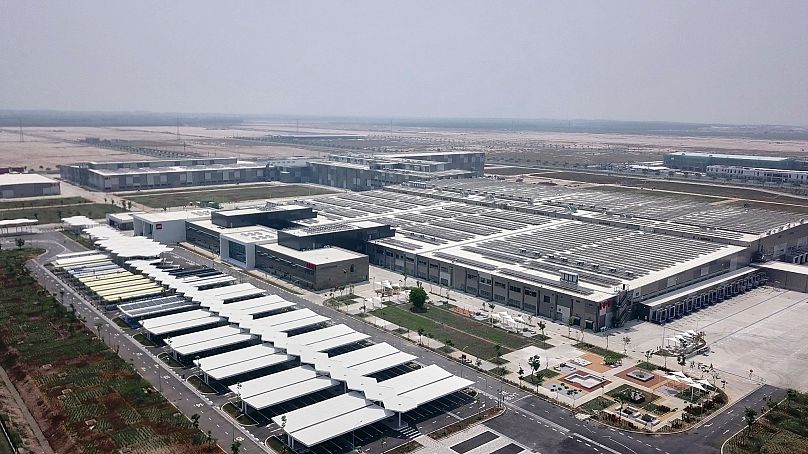
The LEGO Group recently revealed an image of its newly opened factory in Binh Duong, Vietnam, showcasing the brand’s commitment to sustainable manufacturing.
Energy Strategy
- Solar panels integrated across the factory’s roof and surrounding areas generate electricity during daylight hours.
- An adjacent energy centre contains large battery banks that store surplus solar power for later use.
- “Even when the sun isn’t shining, the stored energy can support the plant round‑the‑clock,” explains Christiansen.
- Approximately 10–20 % of the factory’s demand is met via contracts with other clean‑energy producers, ensuring a full green supply.
Commitment to Climate Goals
“Lego and Vietnam share the same aspirations: to be green and contribute to climate action,” says Jesper Hassellund Mikkelsen, Senior Vice President of Asia Operations.
He adds that the combination of solar, battery storage, and dynamic power purchase agreements (DPPA) proves that large‑scale sustainable production is achievable.
Planting trees and avoiding tariffs
Vietnam Distribution Hub Set to Boost Regional Reach
In a strategic expansion, the company is opening a new distribution center in Vietnam’s southern Dong Nai province. This facility will strengthen service delivery for markets in Australia and other Asian countries where the company sees significant growth opportunities.
By locating its factories near the areas it supplies, the company aims to protect its operations from the trade tariffs imposed by U.S. President Donald Trump, said Christiansen.
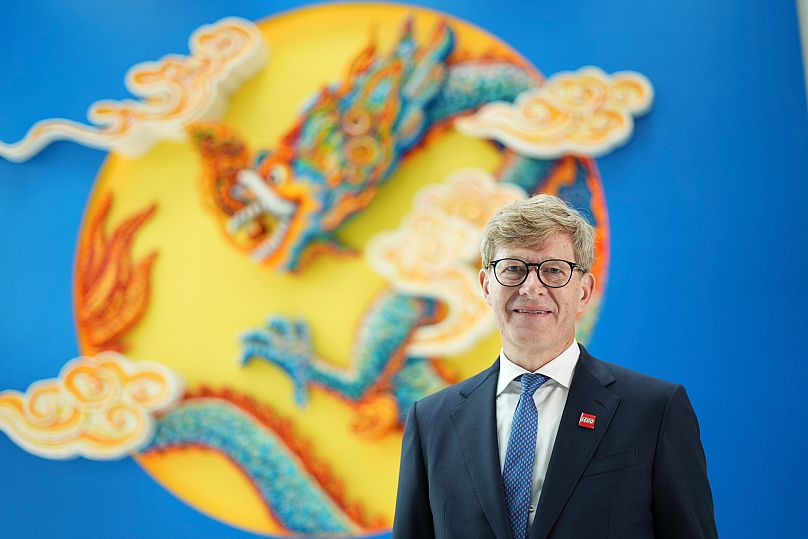
Vietnam’s New Lego Factory: A Model of Sustainability
State‑of‑the‑Art Planting
- Five newly built buildings meet stringent energy‑efficiency standards.
- The site has planted 50,000 trees—twice the number removed to make space for the factory.
- For the first time, single‑use plastic bags have been replaced by paper bags for all packaging.
CEO Niels Christiansen’s Vision
During a tour of the Vietnam site, Niels Christiansen reflected on how consumer sentiment in different regions can influence growth. “We are monitoring how feelings about green products change around the globe, and what that could mean for Lego’s future,” he said.
From Wood to Plastic
- Lego’s founder, Ole Kirk Kristiansen, began producing wooden toys before patenting the plastic bricks in 1958.
- Today, LEGO seeks ways to make more of its iconic bricks from renewable materials.
- Christiansen noted that bricks are durable for decades and can be reused, but the ultimate ambition is a more sustainable supply chain.
Future‑Proofing the Brand
Lego’s new facility demonstrates a clear commitment to reducing environmental impact. By combining energy‑efficient design, reforestation, and packaging innovations, the company is positioning itself as a leader in both creativity and sustainability.
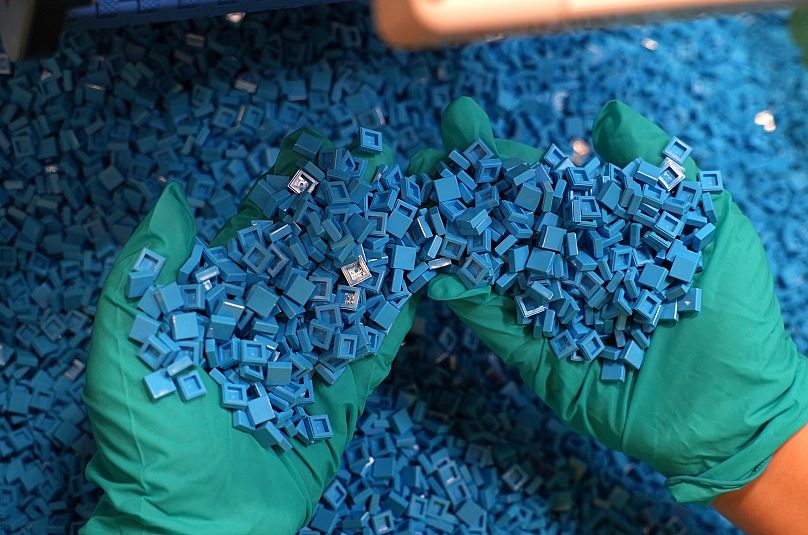
Lego Factory in Binh Duong Shifts to Sustainable Production
At a Lego manufacturing site in Binh Duong province, Vietnam, a worker carefully holds a set of bricks for inspection.
Key Highlights
- Renewable & Recycled Materials – One‑third of the components used in last year’s bricks stem from renewable and reclaimed sources.
- Cost Considerations – These eco‑friendly materials currently carry a higher price tag compared to plastics derived from fossil fuels.
- Future Vision – The factory leadership believes that investing in this approach will eventually establish a robust supply chain for plastics that do not rely on fossil fuels.
Quote from the Factory Lead
“While the current cost is higher, we are committed to moving forward. By embracing this path, we aim to create a reliable supply of environmentally‑friendly plastics for our products.”
Accessibility
Users can navigate the page more easily using keyboard shortcuts.
Share the News
Feel free to share this update with your network.